Circuito impreso FR-4 Fabricación
LEADHUI PCB fabrica placas de circuito impreso FR-4 de una cara, de dos caras, multicapa, de alto Tg, con alto contenido de cobre y de impedancia controlada para proyectos de electrónica, desde la fase de prototipo hasta la producción.Cotizar Ahora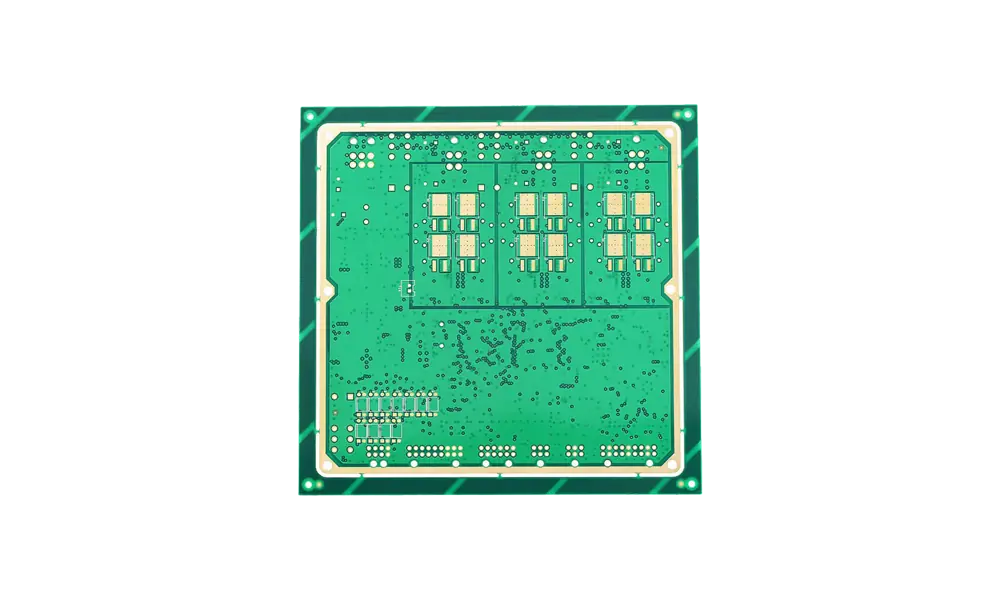
Tipos de placas de circuito impreso FR-4 que fabricamos
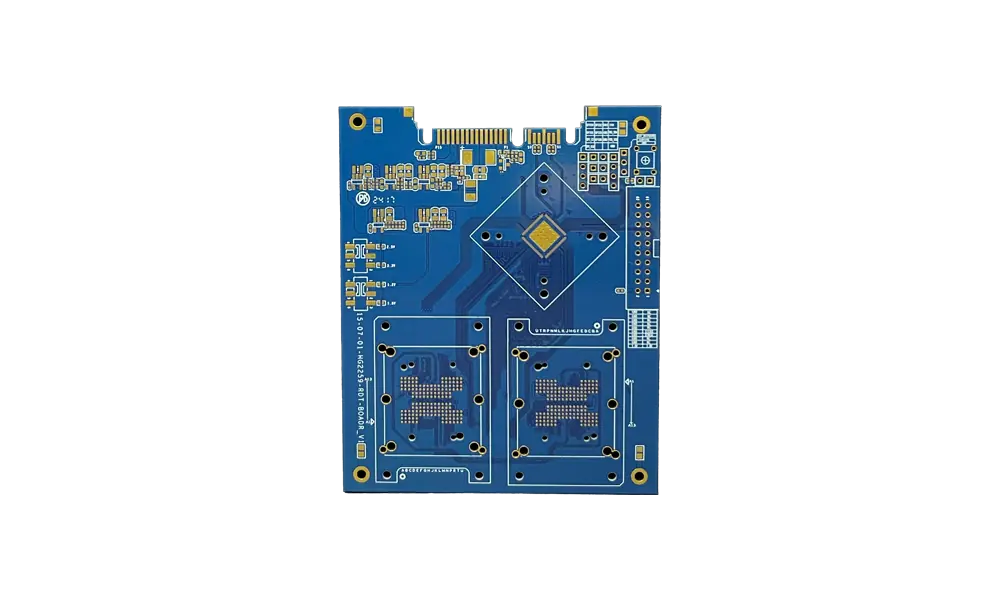
Circuito impreso FR-4 de una sola cara
La configuración rígida más rentable con una sola capa de enrutamiento de cobre unida a un núcleo estándar de fibra de vidrio-epoxi. Optimizada para diseños de circuitos simples.
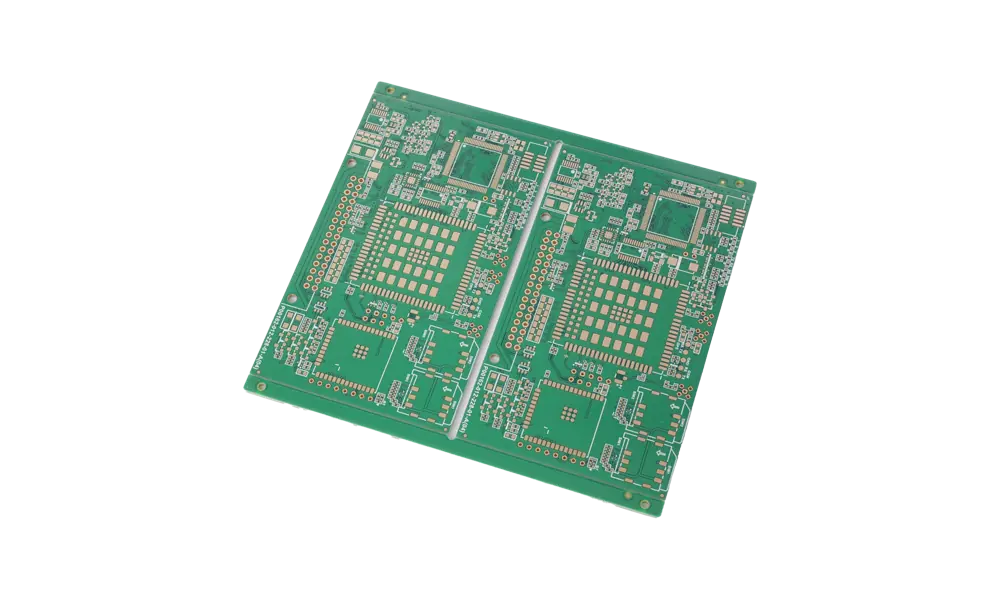
Circuito impreso FR-4 de doble cara
Diseñada para circuitos de densidad media. Cuenta con capas de enrutamiento de cobre en ambos lados interconectadas mediante Agujeros Pasantes Metalizados (PTH) de precisión, permitiendo que los componentes se monten en ambos lados.
Circuito impreso FR-4 multicapa
Arquitecturas de interconexión 3D de alta densidad con capas alternas de cobre y prepreg. Proporciona distribución de energía estable (planos) y control de impedancia preciso para circuitos digitales complejos.
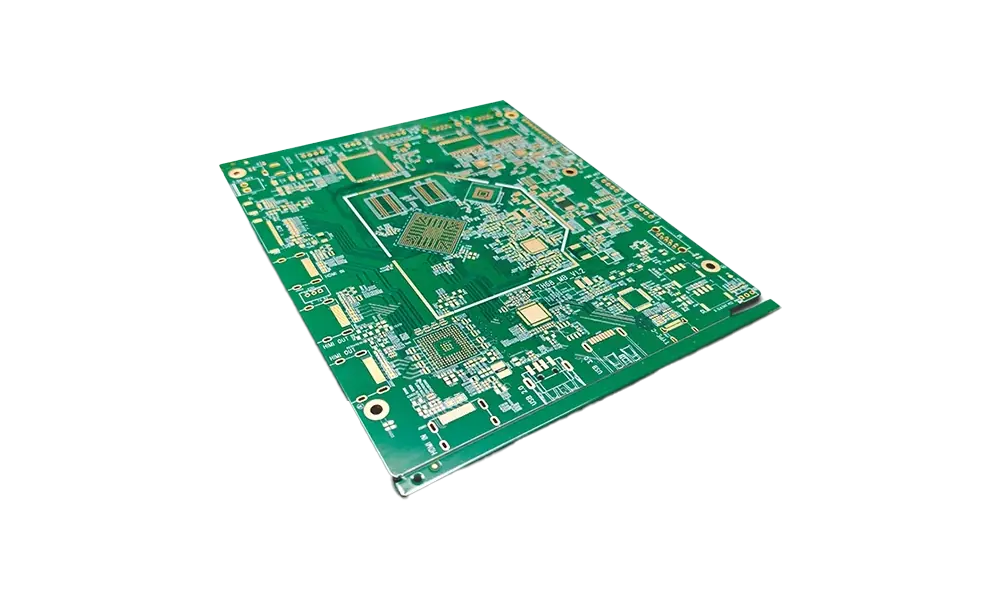
Circuito impreso FR-4 de alta Tg
Formulated with premium modified epoxy resins to withstand severe thermal stress. Minimizes Z-axis thermal expansion (CTE) to prevent delamination during lead-free (RoHS) reflow soldering.
¿Qué es una placa de circuito impreso FR-4?
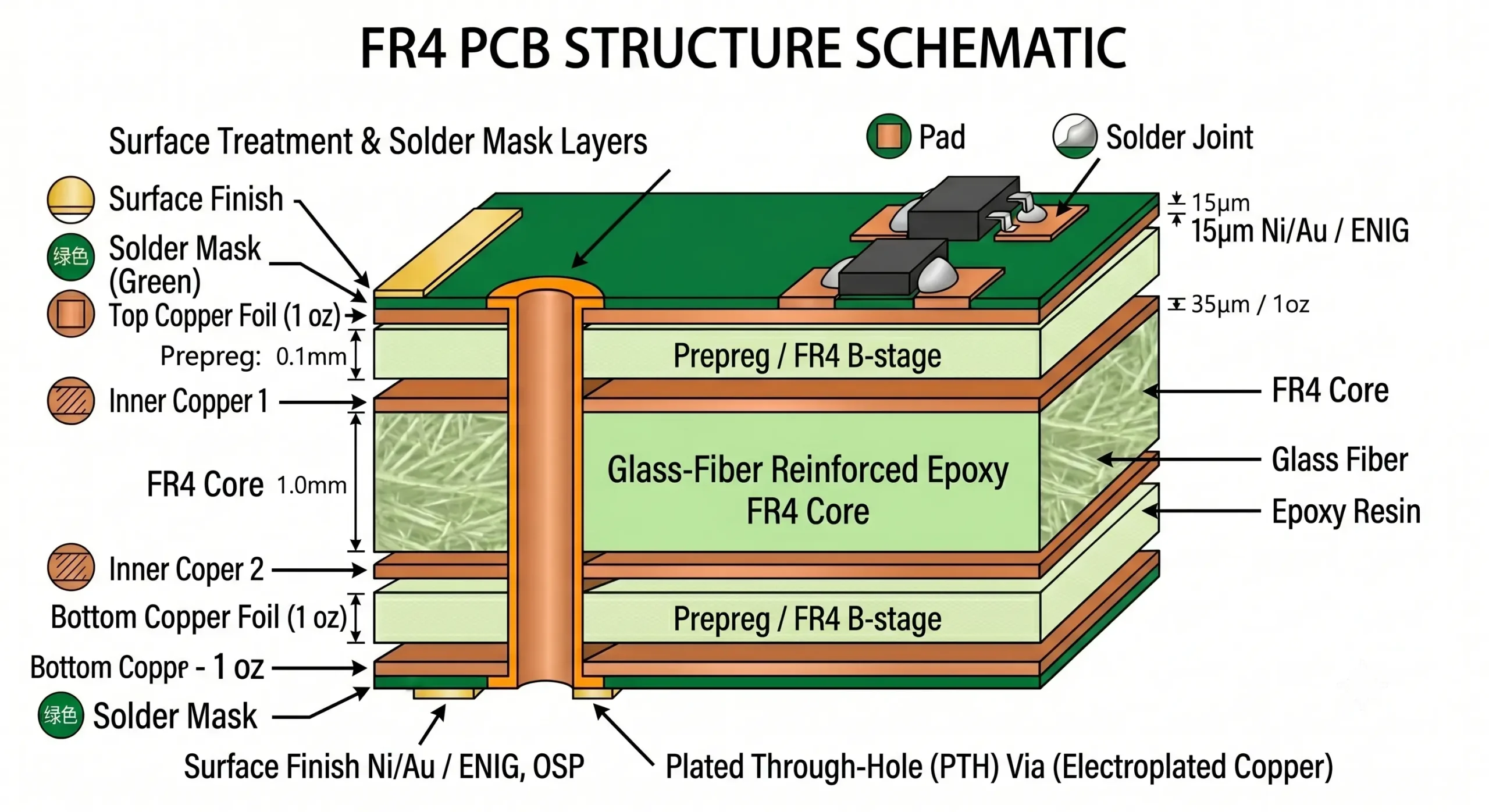
El FR-4 es un laminado epoxi reforzado con fibra de vidrio e ignífugo que se utiliza como material base aislante de una placa de circuito impreso rígida. Se lamina una lámina de cobre en uno o ambos lados del núcleo de FR-4 y, posteriormente, se le da forma para crear los circuitos eléctricos.
Este material es apreciado por:
- Buen aislamiento eléctrico y estabilidad dieléctrica
- Sólido soporte mecánico para componentes y conectores
- Rendimiento confiable en aplicaciones electrónicas estándar
- Compatibilidad con los procesos habituales de fabricación y ensamblaje de placas de circuito impreso
- Amplia disponibilidad de materiales y precios competitivos
“FR-4” se refiere a una familia de materiales más que a una formulación específica. LEADHUI PCB puede recomendar materiales FR-4 estándar, de alto Tg, libres de halógenos u otros materiales adecuados, de acuerdo con su temperatura de operación, objetivo de confiabilidad, número de capas, impedancia y requisitos de ensamblaje.
Proceso de fabricación de placas de circuito impreso FR-4
1. Revisión de la documentación y evaluación técnica
Nuestro equipo revisa tus archivos Gerber, archivos de taladrado, la disposición de capas, el plano de fabricación y los requisitos técnicos. Confirmamos cualquier inquietud relacionada con la factibilidad de la fabricación antes de que comience la producción.
2. Preparación del material y obtención de imágenes de la capa interna
Se preparan el laminado FR-4 seleccionado y la lámina de cobre. Los circuitos de las capas internas se exponen, se graban, se inspeccionan y se preparan para el laminado.
3. Laminado multicapa
En el caso de las placas multicapa, las capas internas se unen con material preimpregnado bajo condiciones controladas de calor y presión para formar la estructura final de la PCB.
4. Perforación y metalización de orificios
Se realiza un perforado mecánico o con láser según el diseño. A continuación, se preparan las paredes de los orificios y se recubren para establecer la interconexión eléctrica entre las capas.
5. Formación del circuito de la capa exterior
Las capas externas de cobre se estampan para crear pistas, almohadillas, planos y otros elementos del circuito.
6. Máscara de soldadura, serigrafía y acabado superficial
La máscara de soldadura se aplica para proteger los circuitos expuestos. A continuación, se añaden las marcas serigrafiadas y el acabado de superficie seleccionado para facilitar el ensamblaje y garantizar la soldabilidad a largo plazo.
7. Prueba eléctrica e inspección final
Las placas se inspeccionan y se someten a pruebas eléctricas de acuerdo con los requisitos de producción aprobados antes de su empaque y envío.
¿Por qué elegir FR-4 para tu PCB?
Rentable para la mayoría de las aplicaciones de PCB rígidos
El FR-4 está ampliamente disponible y es compatible con los procesos habituales de fabricación de placas de circuito impreso, lo que ayuda a controlar los costos de materiales y producción sin sacrificar el rendimiento esencial.
Opciones de diseño flexibles
El FR-4 permite fabricar desde placas simples de una sola capa hasta complejas estructuras multicapa, lo que lo hace adecuado tanto para el desarrollo de productos como para la ampliación de la producción.
Compatible con el montaje SMT y el montaje por orificios pasantes
Las placas FR-4 funcionan bien con procesos de soldadura por reflujo, soldadura por ola, soldadura selectiva y ensamblaje manual. Son compatibles con el ensamblaje de PCB de tecnología SMT, THT y mixta.
Apto para muchos sectores
Las placas de circuito impreso (PCB) de FR-4 se utilizan en una amplia gama de aplicaciones, entre las que se incluyen la electrónica de consumo, los controles industriales, los dispositivos de telecomunicaciones, la instrumentación, los productos para el hogar inteligente, la electrónica LED, los sistemas de energía y el hardware de IoT.
Capacidades técnicas
| Artículo | Capacidad para placas de circuito impreso FR-4 |
|---|---|
| Tipo de placa de circuito impreso | Placas de circuito impreso rígidas de FR-4. |
| Número de capas | De 1 a 32 capas, sujeto a la revisión de la construcción y el diseño de la placa. |
| Fabricación de tablas | Diseños de placas de circuito impreso (PCB) de una cara, de dos caras, multicapa, HDI y FR-4 de alta densidad. |
| Material estándar | Laminado epoxi reforzado con fibra de vidrio FR-4 estándar. |
| Opciones de materiales | FR-4 de alta Tg, FR-4 sin halógenos, FR-4 de alto CTI y ciertos materiales de baja pérdida están disponibles previa revisión técnica. |
| Espesor de la tabla | Los espesores habituales de las placas oscilan entre 0,4 mm y 3,2 mm. Se ofrecen espesores personalizados según la disponibilidad de materiales y los requisitos de la estructura de la placa. |
| Peso del cobre | De 0.5 oz a 6 oz de cobre para diseños estándar. Se ofrece una construcción con cobre de mayor espesor para aplicaciones de mayor intensidad de corriente, previa revisión. |
| Espacio mínimo entre trazos | Depende del espesor del cobre, el número de capas, la estructura de la placa y los requisitos de producción. Se ofrece trazado de líneas finas para diseños HDI. |
| Diámetro mínimo del orificio | Se ofrecen opciones de perforación mecánica y perforación con láser según el espesor de la placa, la relación de aspecto y los requisitos de diseño de las vías. |
| A través de tipos | Las vías, las vías ciegas, las vías enterradas, las vías en la almohadilla, las vías rellenas, las vías tapadas y las microvías están disponibles previa revisión de ingeniería. |
| Acabados superficiales | HASL, HASL sin plomo, ENIG, OSP, estaño por inmersión, plata por inmersión, oro duro y otros acabados según los requisitos del proyecto. |
| Máscara de soldadura | Verde, negro, blanco, rojo, azul, amarillo y máscara de soldadura personalizada; los colores están sujetos a la disponibilidad de materiales. |
| Serigrafía | Blanco, negro y opciones seleccionadas de colores de serigrafía, dependiendo del contraste de la máscara de soldadura y los requisitos del proyecto. |
| Impedancia controlada | Disponible para diseños de alta velocidad, relacionados con la radiofrecuencia y sensibles a las señales. Se deben proporcionar los objetivos de apilamiento y de impedancia para su confirmación por parte del equipo de ingeniería. |
| Características especiales | Contactos dorados, chapado en los bordes, orificios almenados, avellanados, contravellanados, panelización, ranurado, fresado y recortes especiales disponibles previa revisión. |
| Pruebas eléctricas | Las pruebas eléctricas se pueden organizar de acuerdo con el diseño de la placa, la disponibilidad de la lista de redes, la cantidad de producción y los requisitos del proyecto. |
| Norma de calidad | Fabricado de acuerdo con los requisitos aplicables de la IPC y la documentación de producción aprobada. |
| Volumen de pedidos | Atiende pedidos de placas de circuito impreso (PCB) de FR-4 para prototipos, lanzamiento de nuevos productos (NPI), volúmenes reducidos y producción. |
Preguntas frecuentes sobre placas de circuito impreso FR4
¿Cuál es la diferencia entre el FR-4 y el material estándar para placas de circuito impreso?
El FR-4 es el material más común para sustratos rígidos de placas de circuito impreso. Se trata de un laminado epoxi reforzado con fibra de vidrio que cuenta con propiedades ignífugas y se utiliza como base aislante en muchas placas de circuito impreso estándar.
¿Es el FR-4 adecuado para aplicaciones a altas temperaturas?
El FR-4 estándar es adecuado para numerosas aplicaciones electrónicas. En caso de mayor estrés térmico, ensamblaje sin plomo o entornos operativos exigentes, puede ser más adecuado un FR-4 de alta Tg u otro material especializado.
¿Las placas de circuito impreso de FR-4 admiten impedancia controlada?
Sí. Se puede lograr una impedancia controlada cuando se confirman la impedancia objetivo, la estructura de capas, el espesor del cobre, el espesor del dieléctrico y la geometría de las trazas durante la revisión de ingeniería.
¿Pueden fabricar placas de circuito impreso FR-4 multicapa?
Sí. LEADHUI PCB admite placas FR-4 de una cara, de dos caras y multicapa. La construcción disponible depende del número de capas, el espesor, el peso del cobre, la estructura de las vías y los requisitos de diseño.
¿Se pueden armar componentes en placas de FR-4?
Sí. Podemos ofrecer servicios de ensamblaje de placas de circuito impreso (PCB) llave en mano o parcialmente llave en mano, lo que incluye el abastecimiento de componentes, el montaje de superficie (SMT), el ensamblaje de orificios pasantes, la inspección, la programación y las pruebas funcionales cuando sea necesario.