IPC J-STD-001, Requirements for Soldered Electrical and Electronic Assemblies, defines requirements for the materials, processes and acceptability of soldered assemblies. It covers how assemblies are made as well as requirements for the resulting connections. A purchase order that cites the standard should identify the applicable revision, product class and project-specific requirements.
For an assembly buyer, the useful question is: what evidence will show that the agreed requirements were followed? The answer connects your drawings and order to the assembler’s process controls, inspection plan and build records.
Punti Chiave
- The official revision table lists Revision J (2024) as the current base document, checked on October, 2026.
- Product class, document revision and application addenda are separate decisions to establish before production.
- Personnel certification demonstrates individual knowledge or skills within its scope; build conformity needs evidence for the actual assembly.
- Agree the required process records, inspection coverage and delivery documentation during quotation.
What J-STD-001 covers in PCB assembly
J-STD-001 addresses soldered electrical and electronic assemblies, including wire and terminal connections, through-hole technology and surface mount technology. Its scope extends beyond the visible shape of a solder joint.
The publisher’s J-STD-001 endorsement program identifies topics including safety, equipment, electrostatic discharge, assembly processes, soldered connection acceptance and test methods. The standard’s public contents preview provides the document structure for readers evaluating its scope.
For a PCB assembly project, organize your review around four areas:
- Inputs: components, solder alloy, flux, equipment and handling conditions.
- People: proficiency for the work assigned, plus any credentials the customer specifically requires.
- Processes: soldering, cleaning and other operations relevant to the assembly.
- Verification: inspection, testing and the records agreed for the build.
These areas connect. A satisfactory final inspection does not, by itself, identify which flux was used or establish the processing history. Conversely, a recorded process setting does not establish that every resulting connection is acceptable. Agree how the manufacturing and verification evidence will work together.
Which revision and addenda apply?
Il official document revision table, checked on October 27, 2026, lists J-STD-001J as the current base revision. Use the complete document designation when discussing an order; “latest revision” can become ambiguous between quotation, production and repeat orders.
Current base revision versus the contracted edition
Revision J was released in 2024. The publisher’s April 8, 2024 announcement describes additions including hardware-installation requirements and illustrations explaining bubbles in X-ray images. Those changes do not mean every assembly requires X-ray inspection.
For procurement, confirm which edition the order invokes and how an edition change will be approved. An existing drawing or customer specification may name an earlier revision. Resolve that conflict before the assembler releases work instructions, rather than silently substituting a newer document.
Automotive and space addenda
Application addenda supplement particular base editions. They are separate from the numbered product classes.
| Document listed by the publisher | Role | Question to resolve before ordering |
|---|---|---|
| J-STD-001J, 2024 | Base soldered-assembly requirements | Which edition does the order invoke? |
| J-STD-001JS, January 2025 | Space supplement to the corresponding base edition | Does the project invoke this supplement? |
| J-STD-001JA/IPC-A-610JA, September 2025 | Automotive supplement used with the corresponding editions of both standards | Which base documents and supplemental requirements apply? |
The application label alone is insufficient to specify the build. Document the selected editions, addenda and customer exceptions together so the quotation and manufacturing instructions use the same requirements.
How Classes 1, 2 and 3 affect the build
Product class expresses the performance expectations against which the assembly requirements are applied. Establish it for the project before discussing class-dependent acceptance criteria.
The following is a plain-language orientation. Use the applicable standard for its complete classifications and requirements.
| Class | Uso generale | Buyer decision |
|---|---|---|
| Classe 1 | General electronic products, where the completed assembly’s function is the principal requirement | Confirm that the application’s service expectations fit this class. |
| Classe 2 | Dedicated-service products requiring continued performance and extended life | Define service expectations and any customer-specific requirements. |
| Classe 3 | High-performance or harsh-environment products where continued performance is critical | Establish the applicable class, verification plan and any additional application requirements. |
“J-STD-001 Class 3” is not a complete manufacturing specification. It leaves the document revision, drawing details, addenda and customer requirements unresolved. Nor does a product’s industry label automatically settle those decisions.
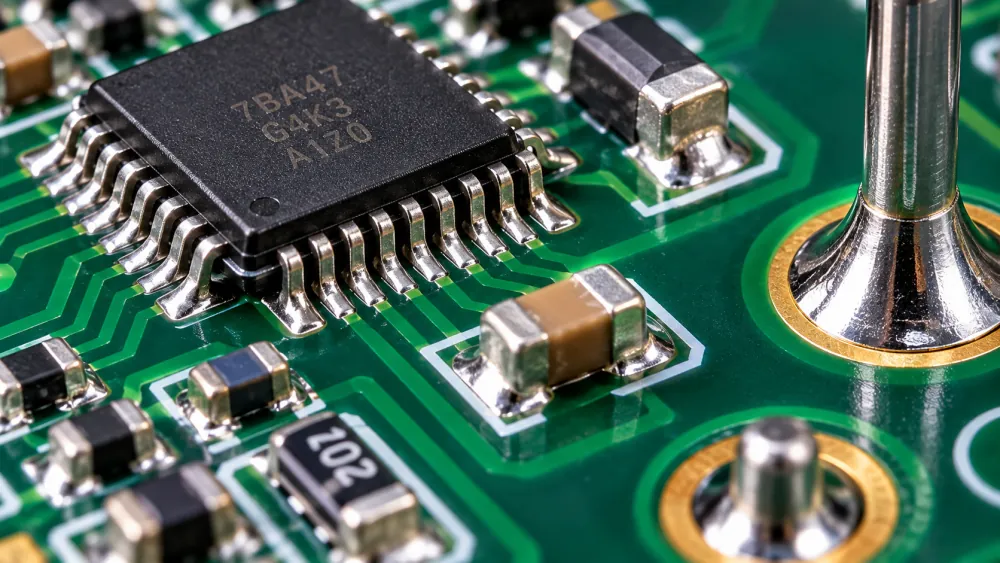
Keep assembly classification distinct from the requirements for the bare board and individual components. A supplier’s general statement about Class 3 work does not identify the requirements or records for your order. For the finished-assembly inspection perspective, see the IPC-A-610 assembly acceptance guide.
Soldering process controls and the evidence behind them
Ask for evidence that matches the process and assembly you are buying. The examples below are recommended supplier-review questions, not a claim that every listed record is an unconditional requirement of J-STD-001.
Materials, equipment and personnel competence
Identify the solder alloy and flux system proposed for the assembly. Ask how the assembler controls material identity, storage, handling and use. If a substitution is possible, establish who approves it and whether it changes process validation or cleaning decisions.
Useful evidence may include material identification, relevant supplier specifications and the work instructions used for the build. For personnel, ask how proficiency is established for the assigned operations. If your contract requires a particular credential, specify its scope and verification rather than accepting a general “IPC trained” statement.
Qualified soldering processes
Process settings should suit the actual assembly, materials and equipment. A recipe copied from another board does not demonstrate that this board’s temperature-sensitive and high-thermal-mass locations were assessed.
For reflow, ask which assembly revision the profile represents and how it was checked. The reflow soldering guide explains profiling in greater depth. For paste printing, solder paste inspection provides a separate view of deposit quality before placement and reflow.
Agree which records you need to receive and which the assembler will retain for review. That distinction avoids requesting a large production data package only after the quoted work is complete.
Cleanliness and process validation
Ask what supports the proposed cleaning or no-clean process for the intended assembly and service conditions. A no-clean material designation alone is not evidence that the assembled product meets your cleanliness expectations.
The publisher’s June 25, 2026 discussion, How Clean Is Clean Enough?, distinguishes contamination monitoring from evidence of electrical and environmental performance. It explains why a contamination measurement alone does not establish product reliability.
Useful questions include: what residue assessment supports the process, what changes trigger reassessment, and which tests or acceptance criteria apply? Obtain the applicable edition and customer specification before specifying a numerical limit. A single generic contamination threshold should not replace a product-specific discussion of materials, process and verification.
Inspection, testing and traceability
Inspection and electrical testing answer different questions. Visible inspection addresses accessible workmanship features. X-ray can provide information about hidden structures, while electrical testing addresses the characteristics included in its test coverage. None independently reconstructs the complete production history.
Agree inspection access, test coverage, handling of exceptions and how results connect to the assembly lot or serial number. Review the available PCB assembly inspection and testing capabilities against your project; specify the coverage needed in the quotation.
J-STD-001 vs IPC-A-610: how they work together
J-STD-001 sets requirements for producing soldered assemblies and includes acceptability requirements. IPC-A-610 supplies acceptance criteria for electronic assemblies. Their purposes overlap at the finished connection, but a final inspection document does not replace the controls needed to produce it.
The publisher’s Revision J announcement describes the standards as commonly used together. For procurement, agree which documents and editions apply rather than treating one designation as shorthand for both.
| Practical question | J-STD-001 | IPC-A-610 |
|---|---|---|
| What governs soldering materials and processes? | Addresses manufacturing requirements and controls | Does not replace the manufacturing specification |
| How is the completed assembly evaluated? | Includes acceptability requirements | Provides assembly acceptance criteria |
| What evidence belongs in the project file? | Documentazione pertinente relativa al processo e alle verifiche concordata per la produzione | Risultati pertinenti delle ispezioni rispetto ai criteri richiamati |
Per esempio, una giunzione saldata dall’aspetto accettabile è una prova utile ai fini dell’ispezione. Non consente però di identificare la lega, il flussante o il processo utilizzati per realizzarla. Collega i risultati delle ispezioni alle registrazioni di produzione richieste dall’ordine.
Cosa specificare in una richiesta di offerta per un assieme
Specifica la documentazione richiesta e i materiali da fornire a supporto mentre l’assemblatore prepara l’offerta. «Conforme a IPC J-STD-001» lascia aperte questioni pratiche che influiscono sulle istruzioni di lavoro, sulle ispezioni e sulla documentazione.
Elenco di controllo delle evidenze da concordare tra acquirente e assemblatore
Usa questa matrice come prassi di approvvigionamento consigliata. Concorda con l’assemblatore ogni elemento da fornire e il relativo momento di verifica; non si tratta della riproduzione di un elenco di controllo obbligatorio previsto da una norma.
| Requisito da concordare | Modalità di attuazione o controllo | Prove da richiedere | Momento della verifica |
|---|---|---|---|
| Edizione, classe e appendici | Allineare l’ordine e le istruzioni di lavoro | Elenco dei documenti concordato | Prima dell’emissione dell’ordine |
| Disegni e deroghe del cliente | Risolvere le note in conflitto e le deroghe approvate | Revisione del disegno rilasciata e approvazioni delle deroghe | Prima della produzione |
| Validazione dei materiali e del processo | Definire la lega, il flussante e i controlli di processo applicabili | Identificazione dei materiali e riepilogo delle validazioni pertinenti | Approvazione del processo |
| Competenza del personale o credenziali specificate | Assegnare personale idoneo al lavoro | Evidenze di competenza o ambito/stato della credenziale richiesta | Verifica del fornitore |
| Pulizia e copertura di ispezioni/prove | Definire il piano di verifica | Metodi concordati, criteri e registrazioni dei risultati | Prima realizzazione e accettazione |
| Tracciabilità e documentazione di conformità | Collegare la produzione spedita ai requisiti approvati | Riferimenti a lotto/numero di serie, stato delle deroghe e certificato di conformità concordato | Verifica della spedizione |
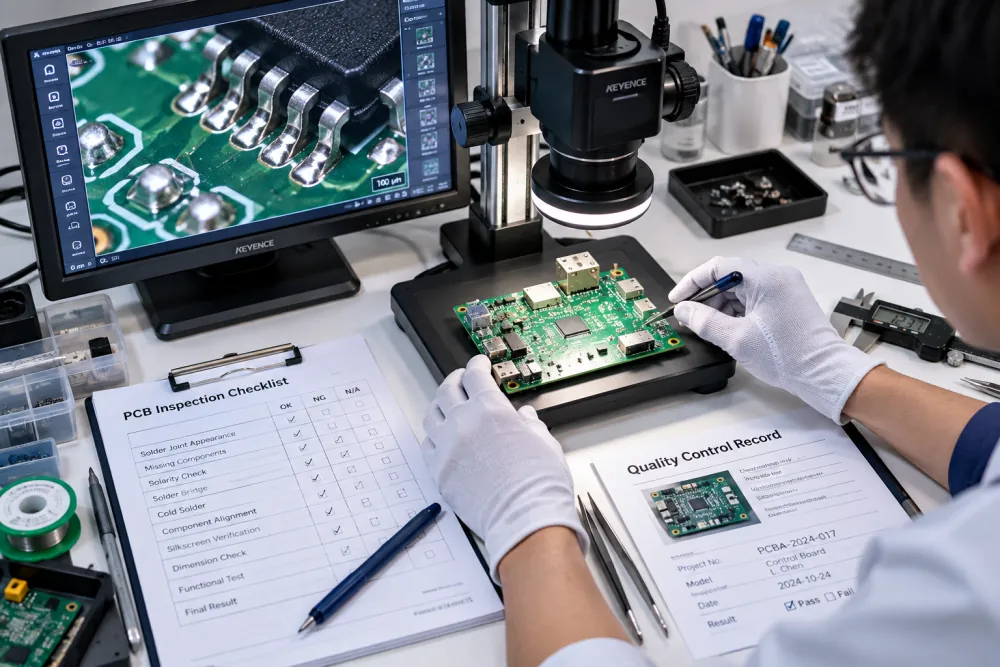
Esempio pratico: risolvere una richiesta incompleta di Classe 3
Scenario illustrativo: Un acquirente invia la nota «Realizzare secondo J-STD-001 Classe 3». Si tratta di un esempio ipotetico di approvvigionamento, non di un caso relativo a un cliente di Lead PCB.
Prima di formulare l’offerta, le parti chiariscono cinque questioni:
- Quale revisione di base viene richiamata?
- A quale assieme e revisione del disegno si applica il requisito?
- Vengono richiamate appendici applicative?
- Sono previste deroghe del cliente o requisiti che vanno oltre la norma di base?
- Quali registrazioni accompagnano la spedizione e quali restano disponibili per la verifica?
Supponiamo che le parti scelgano la Revisione J per un controller destinato ad applicazioni terrestri, non richiamino alcuna appendice applicativa e concordino un piano separato di ispezione/prova. Una nota d’ordine più chiara potrebbe essere:
Assemblare la PCBA del controller, revisione C, in conformità a J-STD-001J, Classe 3, utilizzando il pacchetto di disegni rilasciato. Applicare il piano di ispezione/prova approvato per il progetto. Non è richiamata alcuna appendice applicativa. Ottenere l’approvazione delle deroghe prima della loro attuazione. Fornire con la spedizione la tracciabilità del lotto, il riepilogo concordato delle ispezioni/prove e il certificato di conformità.
Il passo successivo utile consiste nel collegare quella nota alle relative registrazioni: le istruzioni di lavoro per la revisione C, i materiali/processi approvati, i risultati delle verifiche del progetto e il lotto spedito. In caso di deroga, la relativa approvazione dovrebbe restare associata alla produzione interessata. Un certificato generico, privo di un ambito chiaro, è meno utile della documentazione che identifica ciò che è stato realizzato e i requisiti attestati.
Cosa attesta la certificazione J-STD-001
I programmi di certificazione J-STD-001 riguardano le conoscenze e le competenze dei singoli entro ambiti di programma definiti. La panoramica ufficiale sulla certificazione distingue questi ruoli:
- Certified IPC Specialist (CIS): For people who need to understand and apply the relevant standard’s criteria. Required modules and additional endorsements define the program coverage.
- Certified IPC Trainer (CIT): For instructors qualified to deliver the applicable certification training and examinations under program rules.
- Certified Standards Expert (CSE): For advanced expertise in interpreting and applying a standard or related standards.
The J-STD-001 endorsement program includes practical assembly activities. Verify the requirements of the particular track before making assumptions about examinations, training duration or renewal.
For supplier qualification, ask which credential is relevant to the work, which endorsements it includes and whether it is current. A credential is evidence about an individual. It does not independently establish that your assembly used the approved materials, followed the agreed process or passed the required inspections. Request those build records separately.
Domande frequenti
Is J-STD-001 a standard for bare PCBs or assembled boards?
IPC J-STD-001 addresses soldered electrical and electronic assemblies. Bare-board fabrication has its own requirements, which should be specified separately. For a turnkey order, distinguish the bare-board specification from the assembly requirements so the supplier can quote and verify both scopes.
Does Class 3 automatically require the space addendum?
Class 3 and the space addendum are separate specification choices. The publisher lists J-STD-001JS as a supplement to its corresponding base edition. Establish the required application documents with the customer; a Class 3 note alone does not identify which addenda the order invokes.
Does a no-clean process eliminate cleanliness verification?
Do not use “no-clean” as a substitute for agreeing how cleanliness will be justified. Ask the assembler what evidence supports the material and process for your product. The detailed obligations, methods and acceptance criteria should follow the applicable standard edition and customer requirements.
Where can I obtain the official standard or PDF?
Use the publisher’s official document channels. The publicly available J-STD-001J contents preview helps identify scope, but it is not the complete licensed standard. Consult the full applicable edition and addenda when interpreting detailed requirements or acceptance limits.
Prepare the requirements before requesting a quote
Send your assembly files with the requested revision, class, addenda and evidence deliverables for turnkey PCB assembly review. Resolve open requirements before order release so the quote, production instructions and acceptance records refer to the same build.