IPC J-STD-001, Requirements for Soldered Electrical and Electronic Assemblies, defines requirements for the materials, processes and acceptability of soldered assemblies. It covers how assemblies are made as well as requirements for the resulting connections. A purchase order that cites the standard should identify the applicable revision, product class and project-specific requirements.
For an assembly buyer, the useful question is: what evidence will show that the agreed requirements were followed? The answer connects your drawings and order to the assembler’s process controls, inspection plan and build records.
Ключевые выводы
- The official revision table lists Revision J (2024) as the current base document, checked on October, 2026.
- Product class, document revision and application addenda are separate decisions to establish before production.
- Personnel certification demonstrates individual knowledge or skills within its scope; build conformity needs evidence for the actual assembly.
- Agree the required process records, inspection coverage and delivery documentation during quotation.
What J-STD-001 covers in PCB assembly
J-STD-001 addresses soldered electrical and electronic assemblies, including wire and terminal connections, through-hole technology and surface mount technology. Its scope extends beyond the visible shape of a solder joint.
The publisher’s J-STD-001 endorsement program identifies topics including safety, equipment, electrostatic discharge, assembly processes, soldered connection acceptance and test methods. The standard’s public contents preview provides the document structure for readers evaluating its scope.
For a PCB assembly project, organize your review around four areas:
- Inputs: components, solder alloy, flux, equipment and handling conditions.
- People: proficiency for the work assigned, plus any credentials the customer specifically requires.
- Processes: soldering, cleaning and other operations relevant to the assembly.
- Verification: inspection, testing and the records agreed for the build.
These areas connect. A satisfactory final inspection does not, by itself, identify which flux was used or establish the processing history. Conversely, a recorded process setting does not establish that every resulting connection is acceptable. Agree how the manufacturing and verification evidence will work together.
Which revision and addenda apply?
Этот official document revision table, checked on October 27, 2026, lists J-STD-001J as the current base revision. Use the complete document designation when discussing an order; “latest revision” can become ambiguous between quotation, production and repeat orders.
Current base revision versus the contracted edition
Revision J was released in 2024. The publisher’s April 8, 2024 announcement describes additions including hardware-installation requirements and illustrations explaining bubbles in X-ray images. Those changes do not mean every assembly requires X-ray inspection.
For procurement, confirm which edition the order invokes and how an edition change will be approved. An existing drawing or customer specification may name an earlier revision. Resolve that conflict before the assembler releases work instructions, rather than silently substituting a newer document.
Automotive and space addenda
Application addenda supplement particular base editions. They are separate from the numbered product classes.
| Document listed by the publisher | Role | Question to resolve before ordering |
|---|---|---|
| J-STD-001J, 2024 | Base soldered-assembly requirements | Which edition does the order invoke? |
| J-STD-001JS, January 2025 | Space supplement to the corresponding base edition | Does the project invoke this supplement? |
| J-STD-001JA/IPC-A-610JA, September 2025 | Automotive supplement used with the corresponding editions of both standards | Which base documents and supplemental requirements apply? |
The application label alone is insufficient to specify the build. Document the selected editions, addenda and customer exceptions together so the quotation and manufacturing instructions use the same requirements.
How Classes 1, 2 and 3 affect the build
Product class expresses the performance expectations against which the assembly requirements are applied. Establish it for the project before discussing class-dependent acceptance criteria.
The following is a plain-language orientation. Use the applicable standard for its complete classifications and requirements.
| Класс | Общего назначения | Buyer decision |
|---|---|---|
| 1-й класс | General electronic products, where the completed assembly’s function is the principal requirement | Confirm that the application’s service expectations fit this class. |
| 2-й класс | Dedicated-service products requiring continued performance and extended life | Define service expectations and any customer-specific requirements. |
| 3-й класс | High-performance or harsh-environment products where continued performance is critical | Establish the applicable class, verification plan and any additional application requirements. |
“J-STD-001 Class 3” is not a complete manufacturing specification. It leaves the document revision, drawing details, addenda and customer requirements unresolved. Nor does a product’s industry label automatically settle those decisions.
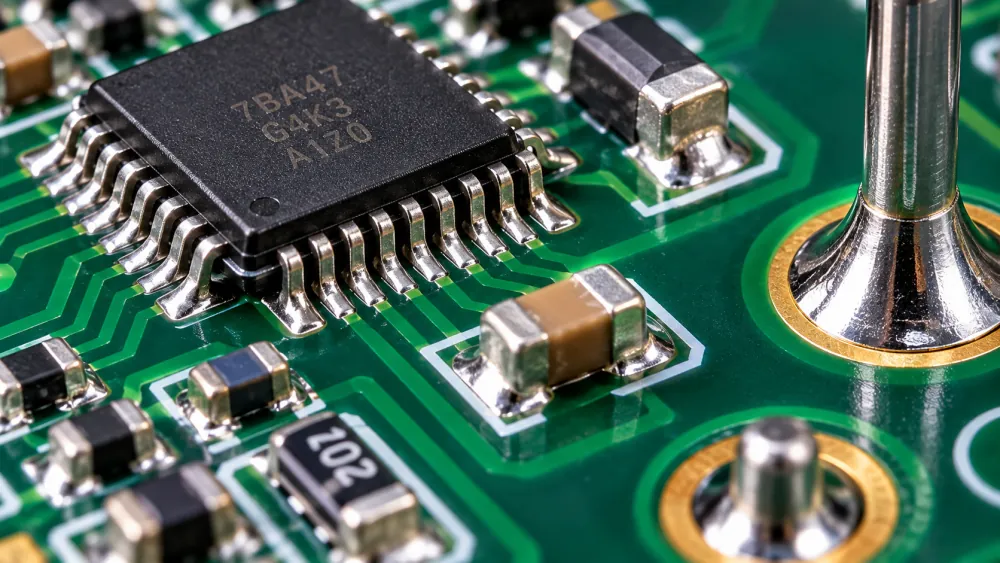
Keep assembly classification distinct from the requirements for the bare board and individual components. A supplier’s general statement about Class 3 work does not identify the requirements or records for your order. For the finished-assembly inspection perspective, see the IPC-A-610 assembly acceptance guide.
Soldering process controls and the evidence behind them
Ask for evidence that matches the process and assembly you are buying. The examples below are recommended supplier-review questions, not a claim that every listed record is an unconditional requirement of J-STD-001.
Materials, equipment and personnel competence
Identify the solder alloy and flux system proposed for the assembly. Ask how the assembler controls material identity, storage, handling and use. If a substitution is possible, establish who approves it and whether it changes process validation or cleaning decisions.
Useful evidence may include material identification, relevant supplier specifications and the work instructions used for the build. For personnel, ask how proficiency is established for the assigned operations. If your contract requires a particular credential, specify its scope and verification rather than accepting a general “IPC trained” statement.
Qualified soldering processes
Process settings should suit the actual assembly, materials and equipment. A recipe copied from another board does not demonstrate that this board’s temperature-sensitive and high-thermal-mass locations were assessed.
For reflow, ask which assembly revision the profile represents and how it was checked. The reflow soldering guide explains profiling in greater depth. For paste printing, solder paste inspection provides a separate view of deposit quality before placement and reflow.
Agree which records you need to receive and which the assembler will retain for review. That distinction avoids requesting a large production data package only after the quoted work is complete.
Cleanliness and process validation
Ask what supports the proposed cleaning or no-clean process for the intended assembly and service conditions. A no-clean material designation alone is not evidence that the assembled product meets your cleanliness expectations.
The publisher’s June 25, 2026 discussion, How Clean Is Clean Enough?, distinguishes contamination monitoring from evidence of electrical and environmental performance. It explains why a contamination measurement alone does not establish product reliability.
Useful questions include: what residue assessment supports the process, what changes trigger reassessment, and which tests or acceptance criteria apply? Obtain the applicable edition and customer specification before specifying a numerical limit. A single generic contamination threshold should not replace a product-specific discussion of materials, process and verification.
Inspection, testing and traceability
Inspection and electrical testing answer different questions. Visible inspection addresses accessible workmanship features. X-ray can provide information about hidden structures, while electrical testing addresses the characteristics included in its test coverage. None independently reconstructs the complete production history.
Agree inspection access, test coverage, handling of exceptions and how results connect to the assembly lot or serial number. Review the available PCB assembly inspection and testing capabilities against your project; specify the coverage needed in the quotation.
J-STD-001 vs IPC-A-610: how they work together
J-STD-001 sets requirements for producing soldered assemblies and includes acceptability requirements. IPC-A-610 supplies acceptance criteria for electronic assemblies. Their purposes overlap at the finished connection, but a final inspection document does not replace the controls needed to produce it.
The publisher’s Revision J announcement describes the standards as commonly used together. For procurement, agree which documents and editions apply rather than treating one designation as shorthand for both.
| Practical question | J-STD-001 | IPC-A-610 |
|---|---|---|
| What governs soldering materials and processes? | Addresses manufacturing requirements and controls | Does not replace the manufacturing specification |
| How is the completed assembly evaluated? | Includes acceptability requirements | Provides assembly acceptance criteria |
| What evidence belongs in the project file? | Relevant process and verification evidence agreed for the build | Relevant inspection results against the invoked criteria |
For example, an acceptable-looking joint is useful inspection evidence. It does not identify the alloy, flux or process used to make that joint. Connect inspection findings to the production records required by the order.
What to specify in an assembly RFQ
Specify the document set and evidence deliverables while the assembler is preparing the quote. “Comply with IPC J-STD-001” leaves practical questions that affect work instructions, inspection and documentation.
Buyer-to-assembler evidence checklist
Use this matrix as recommended procurement practice. Agree each deliverable and its review point with the assembler; it is not a reproduction of a mandatory standard checklist.
| Requirement to agree | Implementation or control | Запрашиваемые доказательства | Review point |
|---|---|---|---|
| Edition, class and addenda | Align the order and work instructions | Agreed document list | Before order release |
| Drawings and customer exceptions | Resolve conflicting notes and approved departures | Released drawing revision and deviation approvals | Before production |
| Materials and process validation | Define alloy, flux and applicable process controls | Material identification and relevant validation summary | Process approval |
| Personnel proficiency or specified credentials | Assign suitable personnel to the work | Competence evidence or the requested credential scope/status | Supplier review |
| Cleanliness and inspection/test coverage | Define the verification plan | Agreed methods, criteria and result records | First build and acceptance |
| Traceability and conformity documentation | Link the shipped build to its approved requirements | Lot/serial references, exception status and agreed certificate of conformance | Shipment review |
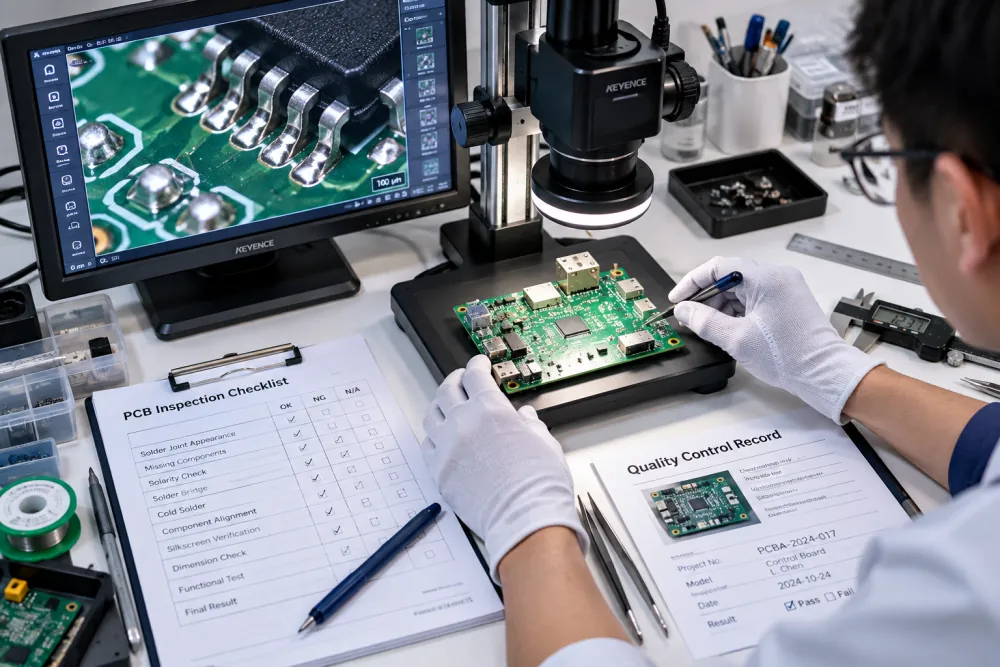
Worked example: resolving an incomplete Class 3 request
Illustrative scenario: A buyer sends the note “Build to J-STD-001 Class 3.” This is a hypothetical procurement example, not a Lead PCB customer case.
Before quoting, the parties resolve five questions:
- Which base revision is invoked?
- Which assembly and drawing revision does the requirement cover?
- Are any application addenda invoked?
- Are there customer exceptions or requirements beyond the base standard?
- Which records accompany shipment, and which remain available for review?
Suppose the parties select Revision J for a terrestrial controller, invoke no application addendum, and agree a separate inspection/test plan. A clearer example order note is:
Assemble controller PCBA revision C to J-STD-001J, Class 3, using the released drawing package. Apply the approved project inspection/test plan. No application addendum is invoked. Obtain approval for departures before implementation. Supply the agreed lot-traceability, inspection/test summary and certificate of conformance with shipment.
The useful next step is to map that note to records: revision C work instructions, approved materials/processes, the project verification results and the shipment lot. If a departure occurs, its approval should remain connected to the affected build. A general certificate with no clear scope is less useful than documentation that identifies what was built and the requirements being attested.
What J-STD-001 certification proves
J-STD-001 certification programs concern individuals’ knowledge and skills within defined program scopes. The official certification overview Разграничивает следующие роли:
- Сертифицированный специалист IPC (CIS): Для тех, кому необходимо понимать и применять критерии соответствующего стандарта. Охват программы определяют обязательные модули и дополнительные отметки о квалификации.
- Сертифицированный инструктор IPC (CIT): Для инструкторов, имеющих квалификацию для проведения соответствующего сертификационного обучения и экзаменов в соответствии с правилами программы.
- Сертифицированный эксперт по стандартам (CSE): Для специалистов с высоким уровнем компетенции в толковании и применении стандарта или связанных между собой стандартов.
Программа дополнительной квалификации по J-STD-001 включает практические задания по сборке. Прежде чем делать выводы об экзаменах, продолжительности обучения или продлении квалификации, уточните требования конкретного направления.
При квалификации поставщика уточните, какой документ о квалификации требуется для этих работ, какие дополнительные отметки о квалификации он включает и действует ли он в настоящее время. Такой документ подтверждает квалификацию конкретного специалиста. Сам по себе он не подтверждает, что при сборке использовались утверждённые материалы, соблюдался согласованный процесс или были пройдены необходимые проверки. Запросите отдельно соответствующие производственные записи.
Часто задаваемые вопросы
J-STD-001 — это стандарт для не смонтированных печатных плат или для собранных плат?
IPC J-STD-001 устанавливает требования к паяным электрическим и электронным сборкам. Для изготовления не смонтированных плат предусмотрены отдельные требования, которые следует указывать отдельно. При заказе сборки под ключ разграничьте спецификацию на не смонтированную плату и требования к сборке, чтобы поставщик мог рассчитать стоимость и проверить оба объёма работ.
Требует ли класс 3 дополнения для космической отрасли автоматически?
Класс 3 и дополнение для космической отрасли — это отдельные варианты спецификации. В издательской документации J-STD-001JS указано как дополнение к соответствующей базовой редакции. Согласуйте с заказчиком документы, применимые к конкретному изделию: одно лишь указание класса 3 не определяет, какие дополнения распространяются на заказ.
Исключает ли применение процесса без отмывки необходимость проверки чистоты?
Не считайте обозначение «без отмывки» заменой договорённости о том, как будет подтверждаться чистота. Спросите сборщика, какими данными подтверждается пригодность материала и процесса для вашего изделия. Подробные обязательства, методы и критерии приёмки должны соответствовать применимой редакции стандарта и требованиям заказчика.
Где можно получить официальный стандарт или PDF-файл?
Пользуйтесь официальными каналами распространения документов издателя. Общедоступный предварительный просмотр содержания J-STD-001J поможет определить область применения, но не является полным лицензированным текстом стандарта. При толковании подробных требований или пределов приёмки обращайтесь к полному тексту применимой редакции и дополнений.
Подготовьте требования до запроса коммерческого предложения
Передайте файлы сборки, указав требуемые редакцию, класс, дополнения и перечень подтверждающих документов, для проверки заказа на монтаж печатных плат под ключ. Уточните все открытые требования до размещения заказа, чтобы коммерческое предложение, производственные инструкции и приёмочная документация относились к одному и тому же варианту сборки.