SMT
Here, you can acquire professional knowledge covering the entire chain from PCB design to assembly, as well as precise analysis of the latest trends in the electronics industry.
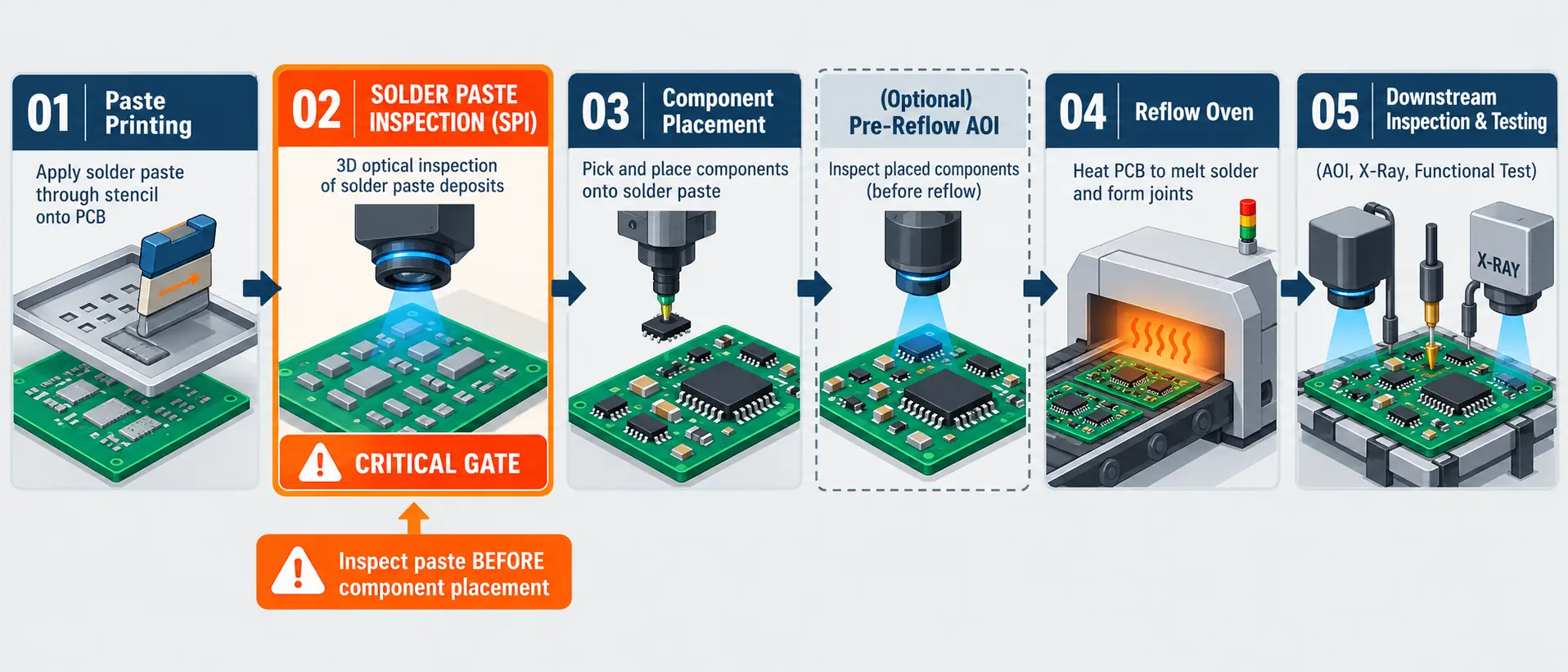
What Is Solder Paste Inspection (SPI)? Measurements, Defects, and Quality Control
Solder paste inspection (SPI) checks paste deposited on a PCB after printing and before component placement. A 3D SPI system measures deposit volume, height, area, and alignment against programmed limits. It allows defective prints to be held and corrected before placement and reflow. For hardware engineers and PCBA buyers, the key decision is whether the…
IPC-A-610: The Complete Guide to Assembly Acceptance
IPC-A-610 is the acceptance standard that decides whether a finished printed circuit board assembly is good enough to ship. It is the document your contract manufacturer's inspectors work from, the one your quality team argues about, and the one your purchase order probably cites without you ever having read it. Most engineers meet IPC-A-610 the…
SMT Meaning: Surface-Mount Technology Explained
SMT means Surface-Mount Technology: a method of attaching electronic components directly onto the surface of a printed circuit board (PCB). Rather than inserting long component leads through drilled holes, SMT uses small surface-mount components that are placed on solder-coated pads and permanently connected through controlled heating. In practical terms, SMT is what makes modern electronics…