Le proprietà del materiale FR-4 che contano di più dipendono da ciò che il tuo PCB deve sopportare: segnali elettrici, calore di assemblaggio, temperature operative, stress di tensione, umidità e carico meccanico. Inizia con costante dielettrica e perdita, espansione termica e stabilità, prestazioni di isolamento e requisiti meccanici.
FR-4 è una classe di materiale epossidico rinforzato con fibra di vetro, ignifugo. Non identifica una formulazione fissa o un insieme di proprietà numeriche. Seleziona un laminato specifico e valuta i suoi dati in condizioni rilevanti per il tuo design.
Questa guida spiega come interpretare tali proprietà, confrontare costruzioni candidate e fornire al tuo fornitore PCB requisiti che ingegneria e acquisti possano entrambi utilizzare.
Punti Chiave
- Registra il prodotto del laminato, la costruzione, la frequenza, la temperatura e il metodo di prova alla base dei valori importanti.
- Valuta la Tg insieme a decomposizione, espansione, delaminazione e dati termici a lungo termine.
- Utilizza dati elettrici specifici per la costruzione quando sviluppi uno stackup; un Dk generico FR-4 è insufficiente per il rilascio.
- Definisci i requisiti di accettazione e l'approvazione delle sostituzioni prima di ordinare.
Proprietà del materiale FR-4 a colpo d'occhio
Una tabella di riferimento con valori, unità e condizioni di prova
Gli esempi seguenti sono valori tipici pubblicati per Isola 370HR, non limiti universali FR-4 o specifiche di acquisto garantite. I metodi sono riprodotti come identificato nella sua scheda tecnica 370HR.
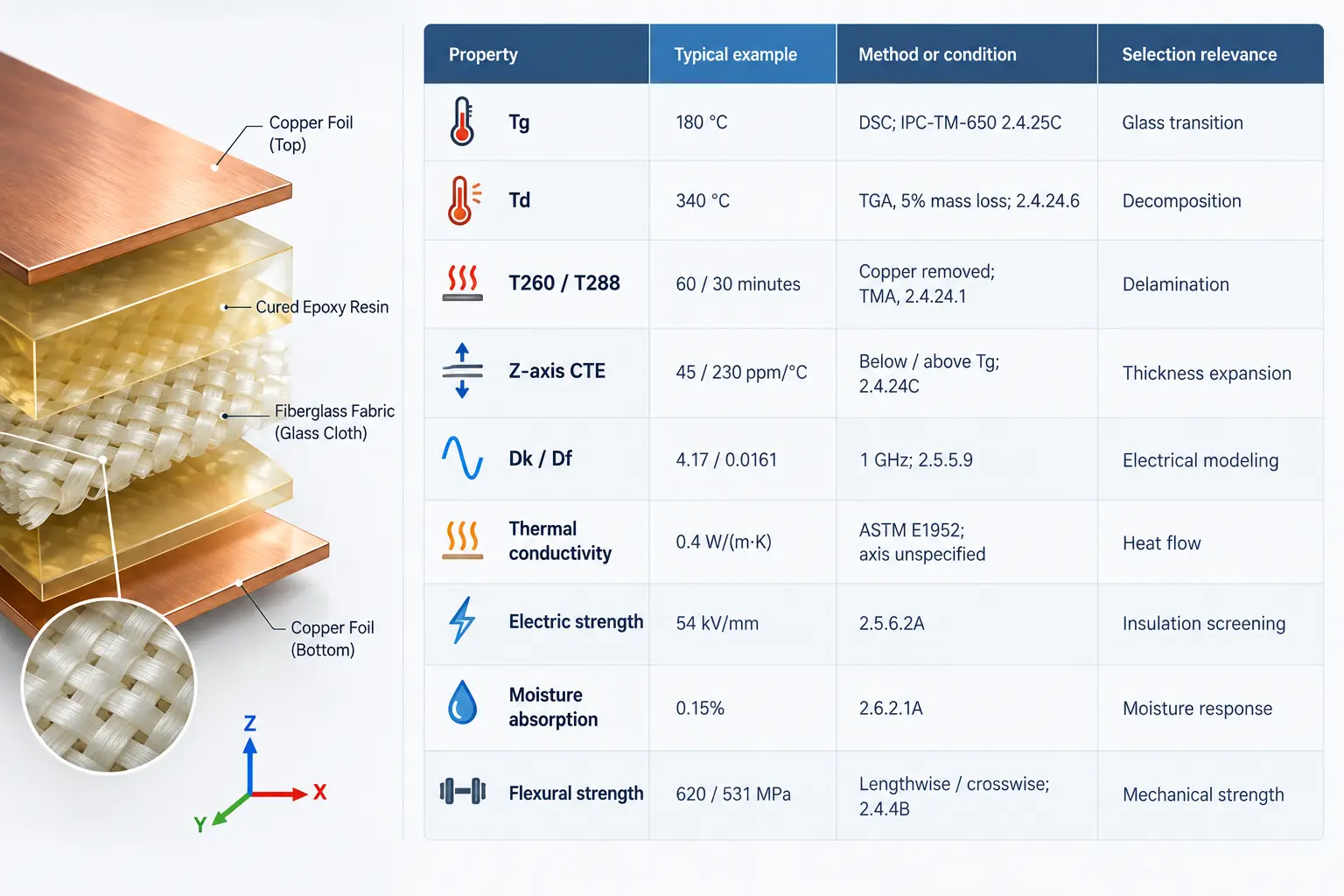
| Proprietà | Esempio tipico | Metodo o condizione | Rilevanza per la selezione |
|---|---|---|---|
| Tg | 180°C | DSC; IPC-TM-650 2.4.25C | Transizione vetrosa |
| Td | 340°C | TGA, 5% perdita di massa; 2.4.24.6 | Decomposizione |
| T260 / T288 | 60 / 30 minuti | Rame rimosso; TMA, 2.4.24.1 | Delaminazione |
| CTE asse Z | 45 / 230 ppm/°C | Sotto / sopra Tg; 2.4.24C | Espansione dello spessore |
| Dk / Df | 4.17 / 0.0161 | 1 GHz; 2.5.5.9 | Modellazione elettrica |
| Conducibilità termica | 0,4 W/(m·K) | ASTM E1952; asse non specificato | Flusso di calore |
| Rigidità dielettrica | 54 kV/mm | 5.6.2A | Screening dell'isolamento |
| Assorbimento di umidità | 0.15% | 6.2.1A | Risposta all'umidità |
| Resistenza alla flessione | 620 / 531 MPa | Longitudinale / trasversale; 2.4.4B | Resistenza meccanica |
Dk e Df sono adimensionali. Un valore senza una direzione identificata non dovrebbe essere assegnato a ogni asse in una simulazione.
Valori tipici delle schede tecniche vs. requisiti di acquisto
Un valore tipico descrive le prestazioni riportate del materiale. Un requisito di acquisto definisce ciò che deve essere accettato o rifiutato.
Per le proprietà critiche, concordare il limite, il metodo, il condizionamento e le prove richieste. Chiedere se la conformità è dimostrata attraverso la qualifica del materiale, un certificato o test specificati. Non presumere che ogni proprietà della scheda tecnica sia misurata su ogni PCB consegnato.
Allo stesso modo, non trasformare un valore tipico in un minimo semplicemente copiandolo in un disegno. Confermare che il fornitore possa supportare il requisito di accettazione proposto.
Perché il FR-4 non ha un unico insieme fisso di proprietà
Sistemi di resina, rinforzo in vetro, core e prepreg
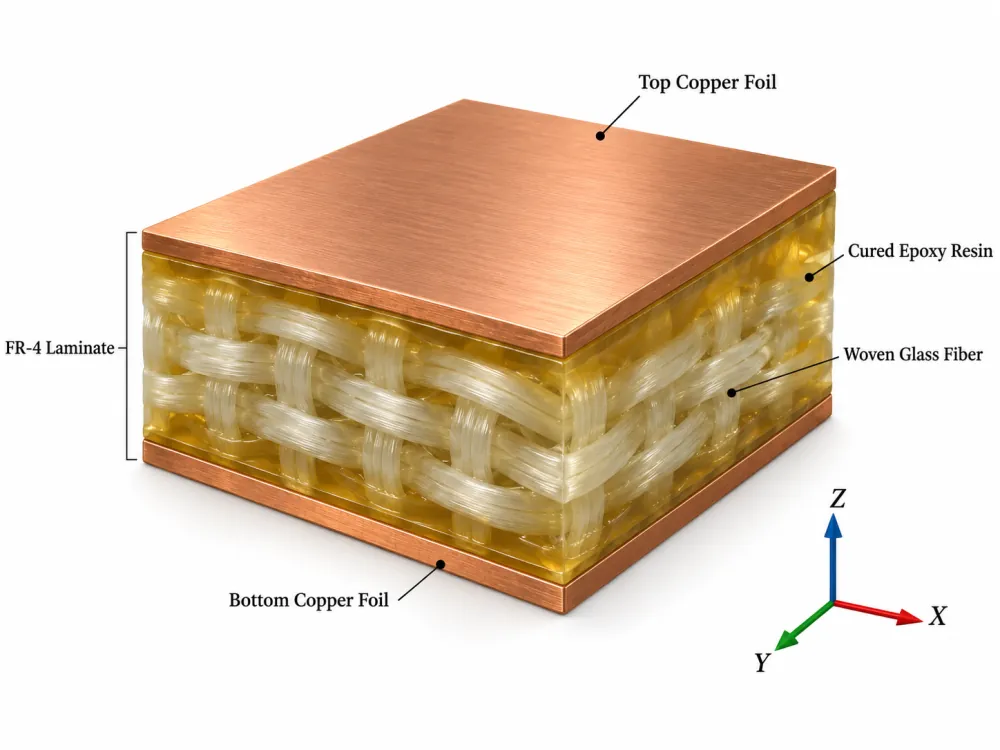
Il FR-4 combina un rinforzo in vetro intrecciato con un sistema di resina epossidica. La formulazione della resina, il tipo di vetro e la proporzione resina-vetro influenzano il materiale risultante. Il foglio di rame è una parte separata della costruzione rivestita in rame.
Nella fabbricazione multistrato, un nucleo è un laminato polimerizzato, comunemente fornito con rivestimento in rame. Prepreg contiene resina parzialmente polimerizzata e rinforzo; unisce gli strati durante la laminazione. Specificare la costruzione dielettrica finita necessaria al design, piuttosto che trattare un foglio di prepreg non polimerizzato come uno strato finito.
La guida alla selezione dei materiali di Isola identifica le caratteristiche della resina, del rinforzo e del foglio di rame come contribuenti alle prestazioni elettriche. La scelta di un laminato deve quindi essere considerata insieme al suo stackup. Guida alla selezione dei materiali Isola.
Designazioni dei materiali, specifiche IPC e classificazioni UL
Queste etichette rispondono a domande diverse:
- FR-4: Identifica la classe del materiale.
- Designazione del produttore e del prodotto: Identifica il particolare sistema di laminato.
- Scheda di specifica IPC-4101: Identifica i requisiti applicabili dei materiali di base quando specificato.
- Classificazione UL 94: Descrive le prestazioni in un test di infiammabilità.
IPC-4101 riguarda i materiali di base per circuiti stampati rigidi e multistrato, inclusi i requisiti di costruzione e proprietà. Specificare la revisione applicabile e la scheda di specifica quando richiesto dal progetto. Ambito e contenuti di IPC-4101.
Verificare la classificazione di infiammabilità richiesta per il materiale e la costruzione selezionati. Una classificazione di infiammabilità non stabilisce una temperatura operativa continua; UL tratta l'infiammabilità e la valutazione termica a lungo termine separatamente. Test dei materiali UL.
Proprietà elettriche: Dk, Df e prestazioni di isolamento
Scegliere i dati Dk e Df per la propria frequenza e stackup
Costante dielettrica, o permittività relativa, influenza la capacità, il ritardo di propagazione e l'impedenza della linea di trasmissione. Fattore di dissipazione, chiamato anche tangente di perdita, descrive la perdita dielettrica.
Per il confronto dei materiali, abbinare la frequenza, il metodo di prova e la costruzione. Per il design, chiedere quali dati o modelli Dk/Df il fornitore raccomanda nella gamma di frequenza rilevante.
La permittività effettiva di una linea di trasmissione dipende da dove viaggiano i suoi campi. Ad esempio, i campi di una microstrip superficiale occupano sia il substrato che la regione sopra di esso. Il suo modello deve tenere conto della geometria oltre che del Dk del laminato massivo.
Il solo Df non può prevedere la perdita totale del canale. Anche la perdita del conduttore, la rugosità del rame e le discontinuità di impedenza contribuiscono. Di conseguenza, non esiste una frequenza universale utile alla quale ogni costruzione FR-4 diventa inadeguata. Valutare la lunghezza del canale e il budget di perdita. Analisi delle linee di trasmissione e delle perdite di Isola.
Prima di instradare le reti critiche, concordare la costruzione, gli spessori dielettrici finiti, il rame, il modello elettrico e gli obiettivi di impedenza. Vedere la guida alla progettazione di PCB a impedenza controllata per il flusso di lavoro più ampio dello stackup.
Rigidità dielettrica, resistività e CTI
Queste proprietà descrivono diversi comportamenti di isolamento:
- Rigidità dielettrica: Tensione di rottura per unità di spessore in condizioni di prova specificate.
- Resistività di volume e di superficie: Resistenza alla conduzione attraverso il materiale o lungo la sua superficie.
- Indice di tracciamento comparativo, o CTI: Resistenza relativa alla formazione di tracce conduttive attraverso una superficie isolante nelle condizioni di prova.
IPC fornisce metodi separati per rigidità elettrica e resistività di volume/superficie. UL descrive il CTI come una valutazione separata di resistenza al tracking.
Non moltiplicare un valore di rottura da datasheet per lo spessore della scheda e trattare il risultato come una tensione di esercizio approvata. Stabilire i requisiti di isolamento a livello di prodotto, inclusi i requisiti applicabili di spaziatura, ambientali e di verifica.
Proprietà termiche: Tg, Td, espansione e flusso termico
Tg, decomposizione, tempo di delaminazione e classificazioni di temperatura a lungo termine
La Tg descrive la regione di transizione vetrosa, dove la rigidità e il comportamento di espansione della resina cambiano. Non è né un punto di fusione né una classificazione completa della temperatura di esercizio. La DSC misura la transizione attraverso il comportamento della capacità termica, mentre la TMA esamina la risposta dimensionale. Conservare il metodo quando si confrontano i risultati. Metodo DSC IPC, Metodo TMA IPC.
La Td riguarda la decomposizione termica. Il criterio di perdita di massa è importante: il metodo TGA dell'IPC riporta le temperature sia al 2% che al 5% di perdita. Confrontare il valore al 2% di un materiale con il valore al 5% di un altro può essere fuorviante. Metodo IPC per la temperatura di decomposizione.
T260 e T288 descrivono il tempo alla delaminazione alla temperatura di prova specificata. La preparazione del provino e la condizione del rame sono importanti. Queste misurazioni non indicano quante passaggi di reflow può tollerare un assemblaggio finito. Metodo IPC per il tempo alla delaminazione.
L'indice termico relativo, o RTI, riguarda l'invecchiamento termico a lungo termine. Dovrebbe essere considerato nell'ambito delle sue condizioni di riconoscimento e della valutazione completa del prodotto. Il lavoro di invecchiamento termico di UL è distinto dalla caratterizzazione termica a breve termine. Valutazione termica UL.
Il compito pratico è rivedere insieme la temperatura di esercizio prevista, il profilo di saldatura, l'esposizione al rework e i requisiti di affidabilità. Un valore elevato di Tg da solo non può risolvere tale revisione.
CTE X/Y e asse Z al di sotto e al di sopra della Tg
Il coefficiente di espansione termica descrive la variazione dimensionale con la temperatura. X e Y giacciono nel piano della scheda; Z attraversa il suo spessore.
Richiedere la direzione e l'intervallo di temperatura alla base di ogni valore di CTE. Un coefficiente al di sotto della Tg non può rappresentare un'intera escursione che attraversa la transizione. Distinguere inoltre un coefficiente in ppm/°C dall'espansione totale espressa come percentuale su un intervallo dichiarato. Metodo IPC per l'espansione termica.
Per la revisione dell'affidabilità dei via, includere l'espansione dello spessore del laminato insieme allo spessore della scheda, alla geometria del foro, alla placcatura e ai cicli termici previsti. Il CTE è un input per tale valutazione, non una garanzia di affidabilità a sé stante.
Conducibilità termica e il percorso termico completo della scheda
La conducibilità termica descrive il trasporto di calore. Risponde a una domanda diversa rispetto a se una resina tollera un'esposizione termica.
Quando un componente funziona troppo caldo, rivedere l'intero percorso di raffreddamento: fissaggio alla scheda, diffusione del rame, via termici, interfacce, flusso d'aria e qualsiasi dissipatore. Aumentare solo la Tg non stabilisce un miglioramento nella rimozione del calore.
Per la simulazione, utilizzare dati dei materiali appropriati alla direzione e rappresentare il rame separatamente. Evitare di applicare un singolo valore di conducibilità del laminato a una scheda multistrato finita contenente rame modellato e via.
Proprietà meccaniche e umidità: cos'altro verificare
Per schede soggette a carichi meccanici, distinguere resistenza da rigidità. La resistenza riguarda la rottura sotto carico; il modulo descrive la resistenza alla deformazione. Anche lo spessore della scheda, le posizioni di supporto e i carichi di montaggio devono entrare nella valutazione meccanica.
Conservare la direzione di prova quando si confrontano laminati rinforzati. Il metodo IPC per la resistenza alla flessione richiede esplicitamente provini longitudinali e trasversali. L'adesione del rame dovrebbe essere valutata separatamente quando le sollecitazioni di lavorazione o rework sono rilevanti. Metodo IPC per la resistenza alla flessione.
Anche l'assorbimento di umidità dipende dal metodo. Il metodo di assorbimento d'acqua a cui si fa riferimento nella tabella di esempio misura l'aumento di massa dopo condizionamento e un'immersione specificata di 24 ore. Tale risultato non descrive ogni esposizione all'umidità né prova l'affidabilità elettrica di una scheda finita. Metodo IPC per l'assorbimento d'acqua.
Per applicazioni umide con polarizzazione elettrica, richiedere prove rilevanti di affidabilità dell'isolamento in aggiunta ai dati di assorbimento. Confermare i requisiti di stoccaggio e movimentazione pre-assemblaggio con il fabbricante.
Esempio pratico: leggere un datasheet FR-4
Identificare il prodotto, la revisione, la costruzione e le condizioni di prova
Scenario ipotetico: Un team sta sviluppando un controller a sei strati con segnali a impedenza controllata. Due costruzioni core proposte hanno lo stesso nome di prodotto del laminato e lo stesso spessore nominale. L'ufficio acquisti chiede se sono intercambiabili.
L'ingegnere registra le revisioni dei documenti: il datasheet del prodotto 370HR identifica la revisione E, mentre le tabelle di costruzione separate identificano la revisione C, datata 16 marzo 2020. Ogni valore numerico rimane associato alla propria fonte.
A un punto di confronto condiviso a 1 GHz, le tabelle di costruzione riportano:
| Costruzione core 370HR | Contenuto di resina | Spessore nominale | Dk | Df |
|---|---|---|---|---|
| Vetro 1 × 2116 | 47% | 0,102 mm | 4.26 | 0.018 |
| 1 × 10⁶ + 1 × 1080 vetro | 60% | 0,102 mm | 4.00 | 0.021 |
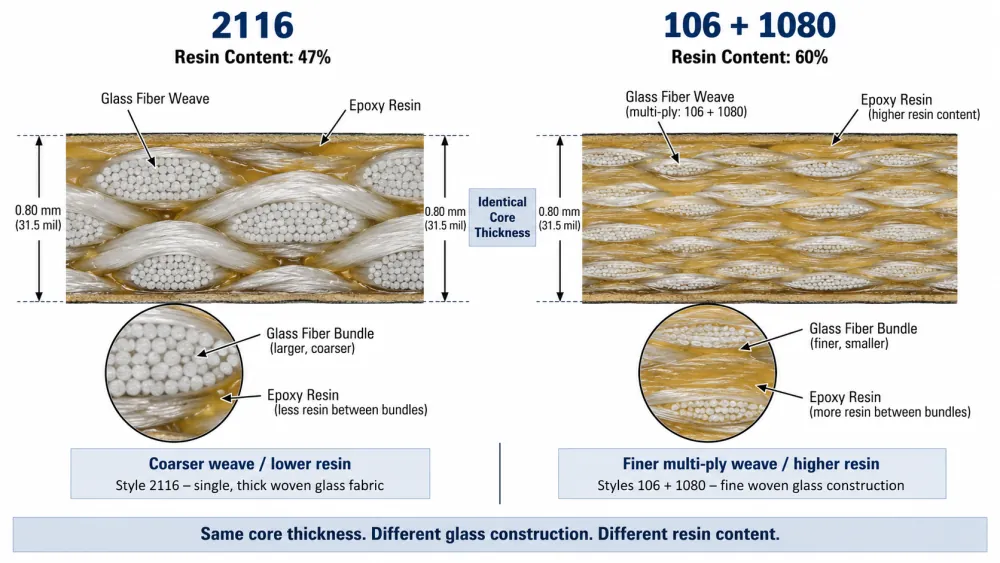
Questi sono dati di riferimento pubblicati, non limiti di accettazione. La tabella autonoma non identifica un metodo di prova per queste voci. Tabelle di costruzione Isola 370HR.
Decidere quali valori possono essere confrontati o utilizzati nella progettazione
Il confronto mostra che la corrispondenza del nome del prodotto e dello spessore nominale non stabilisce un comportamento elettrico identico.
La risposta ingegneristica è:
- Confermare quale costruzione è effettivamente proposta e ottenere i dati correnti applicabili.
- Concordare il modello e le dimensioni finite con il fabbricante.
- Ricalcolare l'impedenza e le prestazioni del canale prima di approvare la modifica.
- Registrare la costruzione approvata e le condizioni di sostituzione.
Né la tabella a livello di prodotto né questo confronto forniscono informazioni sufficienti per prevedere l'impedenza finale da soli. L'esempio inoltre non dimostra che una costruzione sia universalmente migliore: la selezione dipende dal circuito e dallo stackup.
Come selezionare un laminato e rivedere un'alternativa
Iniziare con il requisito di progettazione limitante. La seguente tabella è un quadro di revisione pratico, piuttosto che una raccomandazione universale sui materiali.
| Preoccupazione principale | Prove da richiedere | Decisione da prendere |
|---|---|---|
| Impedenza o ritardo di propagazione | Modello Dk specifico per la costruzione e stackup finito | Confermare la geometria della traccia e le tolleranze |
| Perdita di canale | Df nella banda rilevante, profilo del rame, analisi del canale | Mantenere il laminato proposto o valutare opzioni a perdita inferiore |
| Assemblaggio e ciclaggio termico | Metodo Tg, criterio Td, espansione, dati di delaminazione, qualifica pertinente | Confermare l'idoneità per le esposizioni termiche previste |
| Rimozione del calore | Conduttività direzionale e modello termico completo | Migliorare il percorso del calore o valutare un'altra costruzione |
| Isolamento e umidità | Proprietà elettriche richieste e prove ambientali pertinenti | Confermare i requisiti di isolamento a livello di prodotto |
| Costo e continuità di fornitura | Materiale proposto, disponibilità della costruzione, tempi di consegna, documentazione alternativa | Approvare una strategia di approvvigionamento documentata |
Per alternative più ampie, consultare la guida alla selezione dei materiali PCB .
Quando si rivede un sostituto, separare la corrispondenza di una specifica da la preservazione di un progetto validato. Il soddisfacimento dello stesso requisito minimo non stabilisce un comportamento elettrico identico o una risposta di fabbricazione identica.
Richiedere un confronto rispetto alle proprietà che contano per la vostra scheda. Documentare le modifiche nella costruzione, nel rame, nei metodi e nello stato di riconoscimento ove pertinente, poi decidere se l'analisi o la qualifica devono essere ripetute. L'ufficio acquisti dovrebbe ricevere una disposizione chiara: approvato, approvato con condizioni o rifiutato.
Cosa includere nella vostra richiesta per PCB FR-4
Una richiesta efficace combina i file di fabbricazione con i requisiti operativi che quei file non possono comunicare.
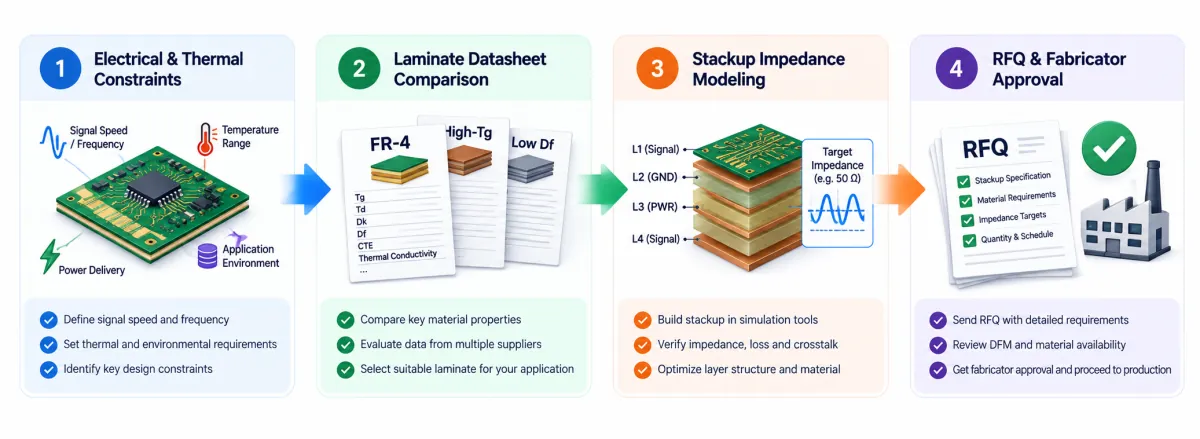
- Applicazione e ambiente: Funzione, temperature previste della scheda, umidità, stress di tensione e aspettative di vita utile.
- Esposizione all'assemblaggio: Processi di saldatura pianificati, profili disponibili e rilavorazione prevista.
- Costruzione della scheda: Numero di strati, spessore finito e tolleranza, requisiti del rame e stackup proposto.
- Obiettivi elettrici: Valori di impedenza e tolleranze, intervallo di frequenza rilevante, lunghezze critiche dei canali e limiti di perdita o ritardo.
- Requisiti dei materiali: Produttore/prodotto obbligatorio, specifica e revisione applicabili, o criteri di prestazione misurabili laddove la scelta del materiale è aperta.
- Accettazione e documentazione: Limiti di proprietà richiesti, metodi, condizionamento, certificati, tracciabilità e eventuali rapporti di prova concordati.
- Politica di sostituzione: Se le alternative sono consentite e chi deve approvarle.
- Requisiti commerciali: Quantità per prototipo e produzione, obiettivo di consegna e necessità di continuità.
Laddove il materiale esatto sia ancora indeciso, chiedere al fornitore di identificare il laminato e la costruzione proposti e spiegare come soddisfano i requisiti indicati.
Per lavori sensibili alle prestazioni, una formulazione utile per la richiesta è:
Si prega di identificare il produttore del laminato proposto, il prodotto, le costruzioni core e prepreg e le revisioni delle schede tecniche di supporto. Indicare eventuali scostamenti dai requisiti forniti. Ottenere l'approvazione ingegneristica scritta prima di modificare il materiale o la costruzione approvati.
L'obiettivo è una specifica dei materiali concordata e collegata al design effettivo del PCB. Inviare lo stackup, i file di fabbricazione e i requisiti operativi con la propria richiesta per PCB FR-4 a LEADHUI PCB.