Fabricación de placas de circuito impreso
Aquí podrá adquirir conocimientos especializados que abarcan toda la cadena, desde el diseño de placas de circuito impreso hasta el montaje, así como un análisis detallado de las últimas tendencias en el sector de la electrónica.
Producción industrial de PCB: proceso y control de calidad
Industrial PCB production turns an approved circuit-board design into bare boards and, when ordered, populated assemblies for industrial equipment. The route includes fabrication, component assembly, inspection and agreed testing. Approval depends on the specified build, operating conditions and acceptance criteria. A motor controller, sensor interface and cabinet-mounted control board can require different materials, mechanical support…
PCB HDI: apilado, microvías y diseño
An HDI PCB, or high-density interconnect printed circuit board, uses fine conductors and compact interlayer connections to fit more wiring into a given area. Laser-drilled microvias and thin buildup layers help connect dense component pads without using a full-thickness hole at every connection. The design question is whether those features solve a routing constraint worth…

PCB rígido: materiales, construcción y decisiones de diseño
A rigid PCB, or rigid printed circuit board, supports components and connects them through copper conductors on a substrate designed to retain its shape in service. It suits electronics whose circuitry stays fixed within an enclosure, rather than bending during use. Choosing one means matching its construction to the circuit, mounting, connectors and environment. Layer…

PCB flexible: tipos, materiales, apilado y reglas de diseño
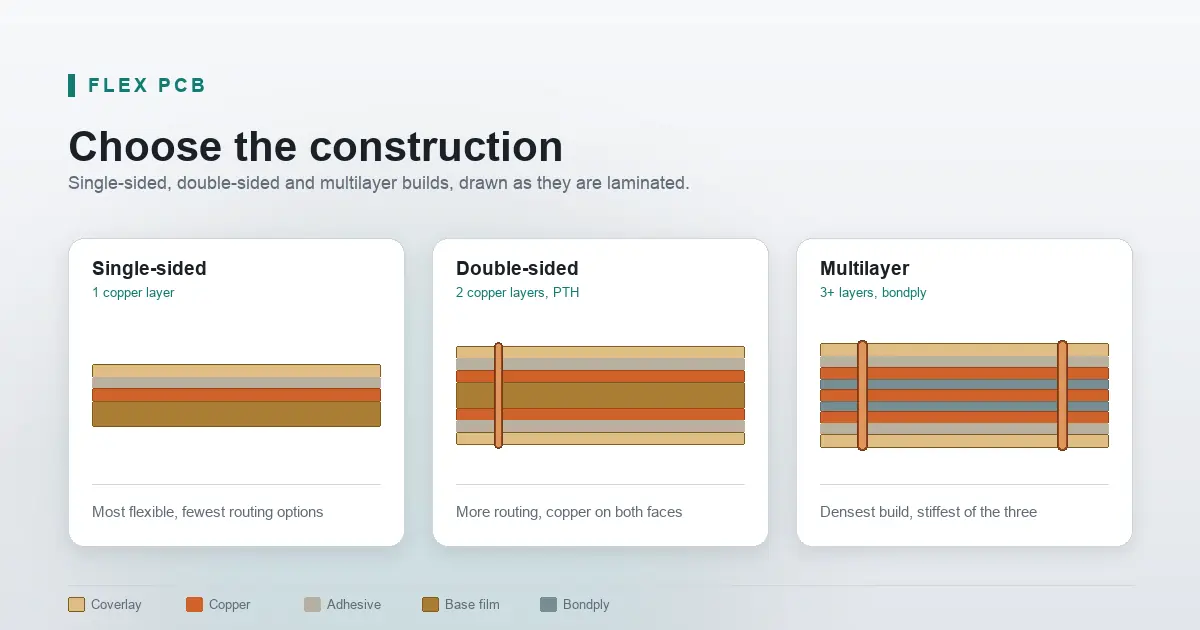
A flex PCB is a circuit built on a flexible polymer film, usually polyimide, with copper conductors bonded to it and a coverlay protecting them. That is the definition, and it is the part already answered above the search results. It is not the part that decides whether your build works. Four questions decide that,…
Radio de curvatura de un PCB flexible: cómo calcularlo y especificarlo
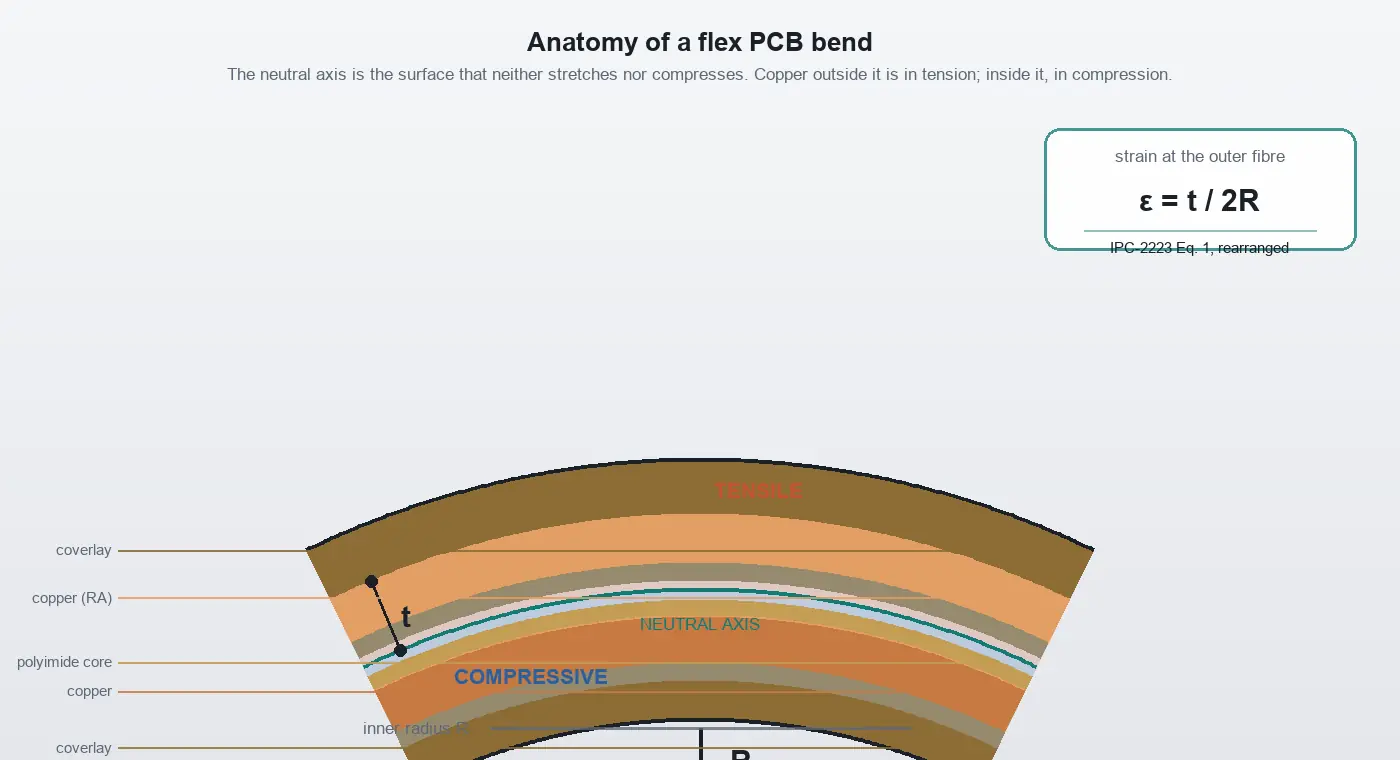
You have a stackup, a housing envelope, and a mechanical engineer asking for a flex PCB bend radius. The answer is not a lookup table; it is a strain calculation, and the multipliers in the tables are what that calculation returns once you fix a stackup. Every published multiplier, whether it reads 6×, 10×, 12×,…
Guía de soldadura por reflujo: proceso, perfil y defectos
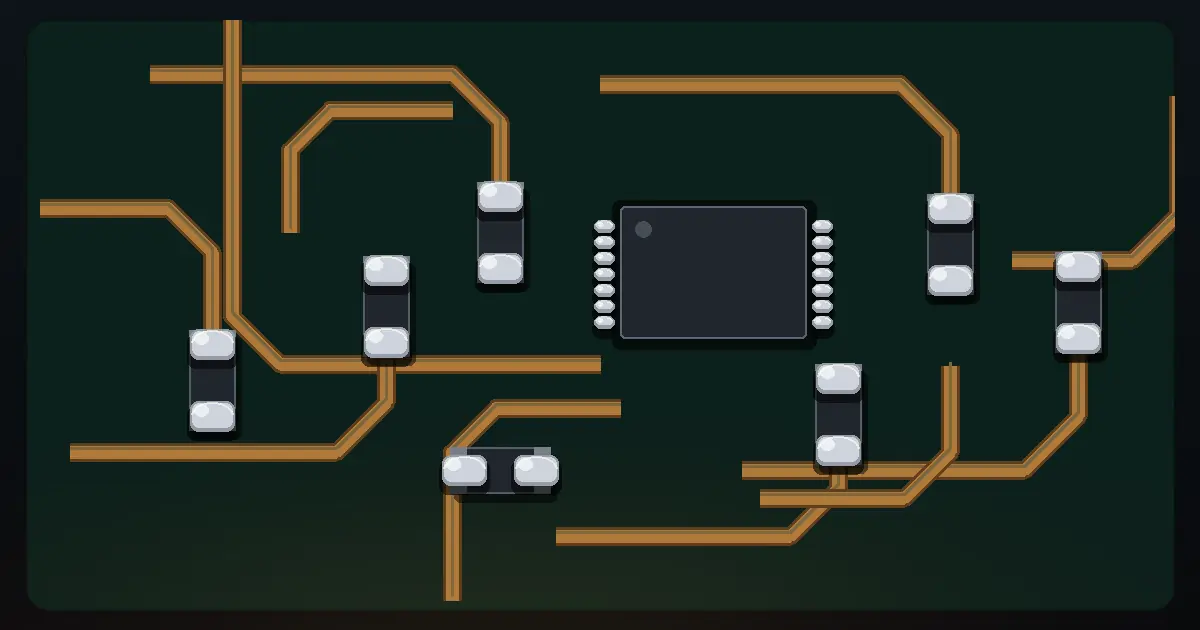
Reflow soldering is the process that attaches surface-mount components to a printed circuit board by heating stencilled solder paste until it melts, wets the component terminations and forms the joint on cooling. It is the primary assembly method for almost every modern electronic product, and it is the step where the most expensive mistakes become…
Laminado revestido de cobre (CCL): tipos, fabricación, rendimiento y estándares
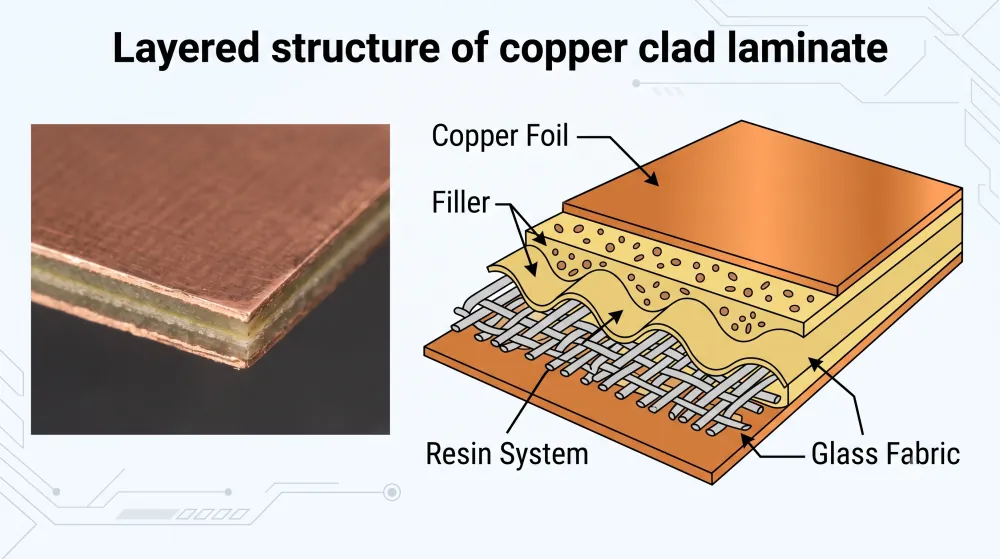
Copper clad laminate, or CCL, is a base material from which PCB conductors are formed. It consists of copper foil bonded to an insulating material such as cured glass-reinforced epoxy, a flexible polymer film, or a thermally conductive dielectric on a metal base. In a conventional multilayer rigid PCB, patterned CCL commonly becomes a core.…
JLCPCB vs. PCBWay: ¿qué fabricante de PCB se adapta a tu proyecto? (2026)
For a straightforward PCB prototype or a small assembly order that fits JLCPCB’s Economic PCBA rules, start with JLCPCB, especially when the components are already in its inventory. For rigid-flex or extensive custom fabrication requirements, shortlist PCBWay early. These recommendations follow from JLCPCB’s economical assembly tier and PCBWay’s documented advanced manufacturing options. The JLCPCB vs…

¿Qué es un agujero pasante? Tipos, usos y guía de diseño de PCB
A through hole is an opening that passes completely from one side of a printed circuit board (PCB) to the other. It may be plated with conductive copper to create an electrical connection, or left unplated for mechanical use. Through holes are commonly used for component leads, connectors, vias, mounting hardware, alignment pins, and slots.…

Guía de material de PCB: tipos, propiedades y selección
El material de PCB afecta mucho más que la resistencia física de una placa de circuito. Influye en la impedancia, la pérdida de señal, la disipación de calor, la estabilidad dimensional, la fiabilidad del ensamblaje, la fabricabilidad, el plazo de entrega y el costo. Un material que funciona bien para un controlador básico puede fallar en un módulo de radar de 77 GHz, una placa LED de alta corriente o un dispositivo médico rígido-flexible.…

Lista de verificación para la calificación de proveedores de PCB [Guía 2026]
Una lista de verificación para la calificación de proveedores de PCB ayuda a los ingenieros y compradores a verificar si un fabricante de PCB, un proveedor de PCBA o un socio de EMS puede cumplir con los requisitos técnicos, de calidad, de entrega y de documentación del producto antes de que comience la producción. La ISO describe la norma ISO 9001:2015 como una norma de gestión de la calidad reconocida a nivel mundial para mejorar el desempeño y mantener un sistema de gestión de la calidad (ISO, 2026). En…
Lista de verificación de DFM para PCB
Una lista de verificación de DFM para placas de circuito impreso (PCB) ayuda a los ingenieros y compradores a detectar problemas de fabricabilidad antes de que se cotice, fabrique, ensamble o envíe a producción una placa. El objetivo es confirmar que el proveedor pueda fabricar el diseño con la estructura de capas, las tolerancias, el acabado, el plan de pruebas y la documentación requeridos. La revisión de DFM reduce las retenciones de ingeniería y ayuda a los compradores a comparar proveedores. Si…