Aluminum PCB
High Thermal Dissipation. Uncompromised Reliability. Engineered for high-power LEDs, automotive electronics, and demanding power conversion applications.Thermal Conductivity Options: 1.0–3.0 W/m.KGet A Quote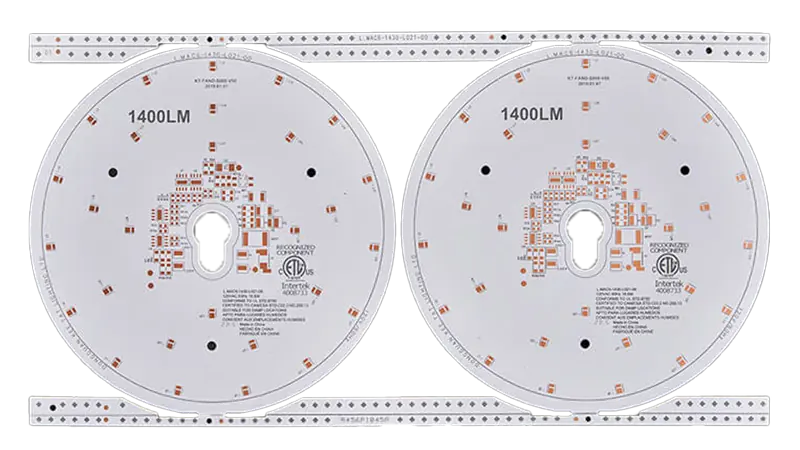
Advanced Aluminum PCB Classifications
We manufacture four distinct types of aluminum-backed PCBs to match your specific thermal, layering, and spatial layout requirements.
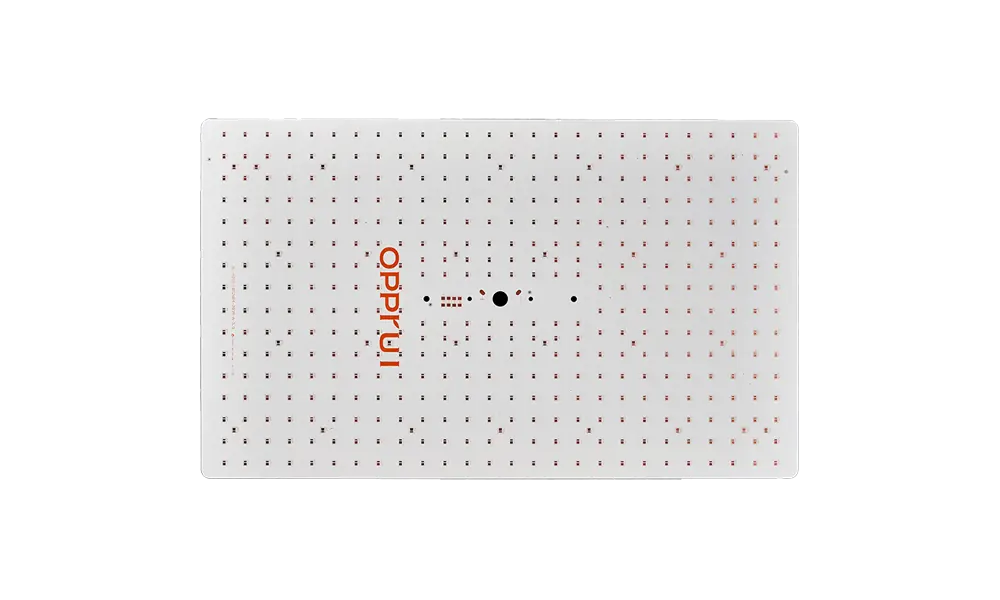
Single-Sided Aluminum PCB
The most cost-effective and common configuration. Consisting of a single copper routing layer, a thermal dielectric layer, and the aluminum base. Optimized strictly for surface mount (SMT) assemblies.
- Layer Count:
- Best For:
- Cost Level:
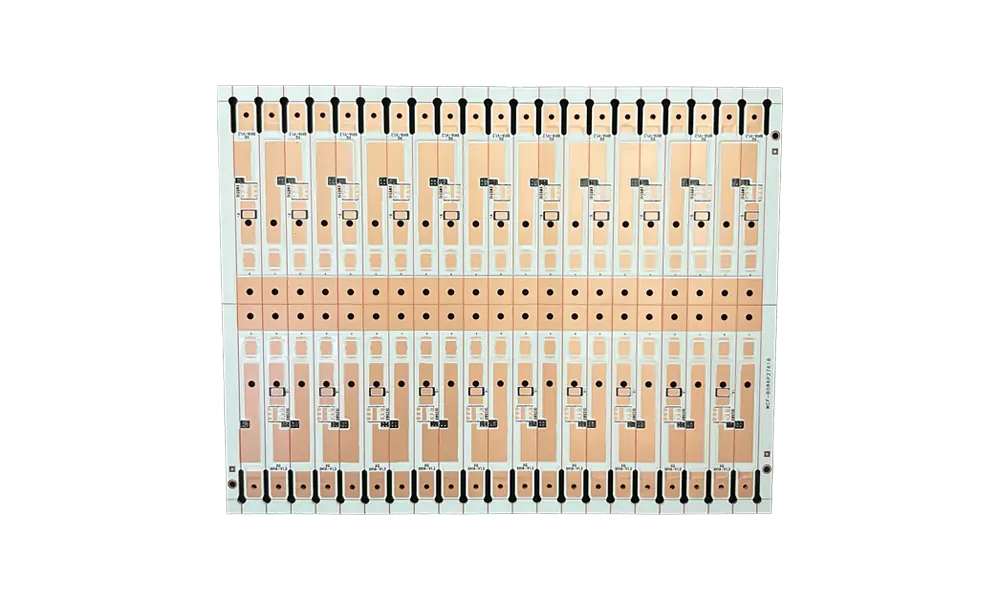
Double-Sided & Multi-Layer
Engineered for complex circuits requiring high component density. By embedding an aluminum core or backing behind multiple FR4 layers, it delivers advanced routing capabilities via specialized insulated plated through-holes (PTH).
- Layer Count:
- Best For:
- Cost Level:
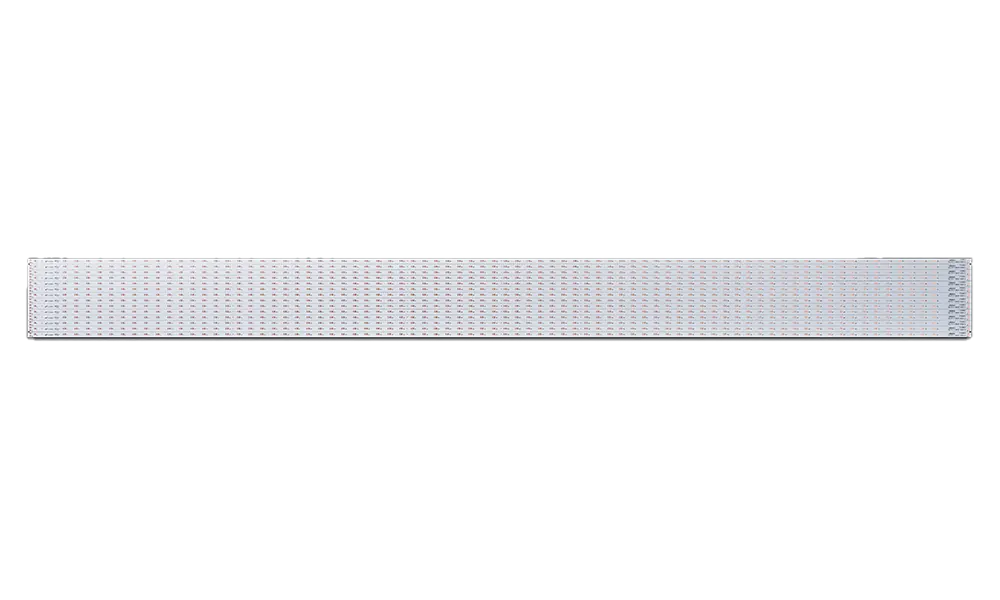
Aluminum PCB Strip / Bar
Aluminum PCB strips and bars are long, narrow metal-core circuit boards designed for linear lighting and LED module applications. They provide stable heat dissipation, consistent LED placement, and flexible length options for different lighting structures.
- Board Type:
- Best For:
- Cost Level:
What Is an Aluminum PCB?
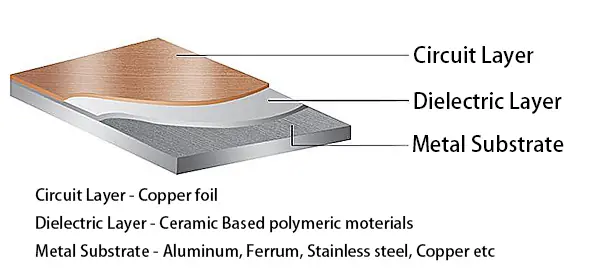
An aluminum PCB is a type of metal core printed circuit board. Instead of a conventional FR-4 base, it uses an aluminum base plate beneath an electrically insulating dielectric layer and copper circuitry.
This structure helps move heat away from heat-generating components and distribute it across the aluminum base. Compared with standard FR-4 boards, aluminum PCBs can provide stronger thermal performance for applications where LEDs, power devices, and other components create concentrated heat.
A typical aluminum PCB construction includes:
- Copper circuit layer
- Thermally conductive dielectric layer
- Aluminum base layer
Aluminum PCB Manufacturing Process
1. Design and Engineering Review
We review Gerber files, board outline, copper thickness, surface finish, thermal requirements, assembly requirements, and special mechanical features before production.
2. Material Preparation
The aluminum base material, dielectric layer, and copper foil are prepared according to the approved board construction.
3. Circuit Imaging and Etching
Copper foil is imaged and etched to form the required pads, traces, thermal areas, and electrical connections.
4. Drilling and Board Profiling
Mounting holes, vias where applicable, slots, cutouts, and custom board outlines are produced according to the approved fabrication files.
5. Solder Mask, Silkscreen, and Surface Finish
Solder mask is applied to protect the copper circuitry. Silkscreen markings and the requested surface finish are added to support reliable assembly.
6. Inspection and Testing
Finished boards receive visual inspection and applicable electrical checks before packing. Functional testing can be arranged for assembled products according to customer requirements.
Why Choose Aluminum PCB?
Technical Capabilities
From rapid prototyping to high-volume mass production, LEADHUI supports a wide range of custom specifications to match your exact project needs:
| Capability Item | Specification |
|---|---|
| PCB Type | Single-Sided Aluminum PCB, Double-Sided Aluminum PCB, LED Aluminum PCB, Custom Aluminum PCB |
| Base Material | Aluminum base, metal core substrate, high thermal conductivity materials |
| Thermal Conductivity | 1.0 W/m.K, 1.5 W/m.K, 2.0 W/m.K, 3.0 W/m.K or custom options |
| Board Thickness | 0.15 mm - 3 mm |
| Copper Thickness | 1 oz - 4 oz or higher upon project review |
| Surface Finish | HASL, Lead-Free HASL, ENIG, OSP |
| Solder Mask | White, Black, Green, Blue, Red and other colors |
| Silkscreen | White, Black and other colors available upon review |
| Profile Processing | CNC Routing, V-Cut, Tab Routing, Custom Shape, Mounting Holes, Slots |
| Testing | Open / Short Test, Electrical Test, Final Inspection |
Aluminum PCB FAQ
What is the difference between an aluminum PCB and an FR-4 PCB?
An aluminum PCB uses a metal base and thermally conductive dielectric layer to improve heat transfer. FR-4 is a glass-reinforced epoxy material used for standard rigid PCBs. Aluminum PCB is often preferred for LED and power applications with higher heat-generation requirements.
Are aluminum PCBs only used for LED lighting?
No. Although they are common in LED lighting, aluminum PCBs are also used in power supplies, chargers, motor controllers, automotive lighting, power modules, and other electronics requiring thermal management.
Can you assemble components on aluminum PCBs?
Yes. LEADHUI PCB supports aluminum PCB assembly, including SMT, through-hole components, LED modules, connectors, wire assembly, and functional testing based on project requirements.
Can aluminum PCBs be customized in long-strip shapes?
Yes. Aluminum PCB strips and bars can be manufactured in custom lengths and widths with mounting holes, cutouts, connectors, scoring, and panelization according to your design.
Can you provide white solder mask for LED PCBs?
Yes. White solder mask is commonly requested for LED lighting boards because it can improve light reflectivity. Other solder mask colors are also available based on project requirements.