Ceramic PCB
Ceramic PCBs are engineered for applications that require excellent heat dissipation, high electrical insulation, high temperature resistance, and long-term reliability. LEADHUI PCB provides custom ceramic circuit board manufacturing for power electronics, LED modules, RF devices, automotive electronics, medical electronics, sensors, and other high-performance applications.High Thermal Conductivity Ceramic SubstratesGet A Quote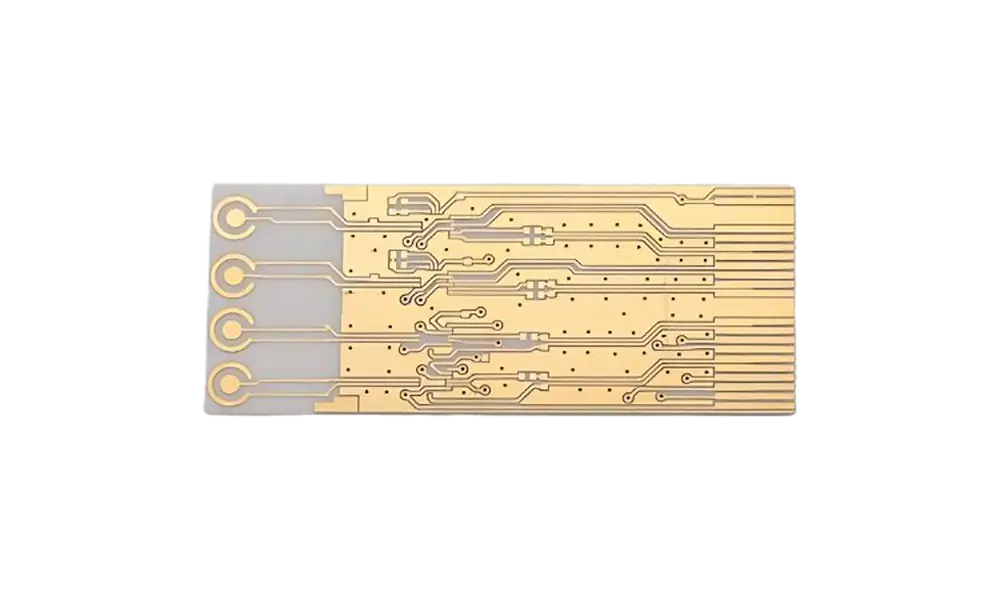
Advanced Ceramic PCB Classifications
We manufacture four distinct types of aluminum-backed PCBs to match your specific thermal, layering, and spatial layout requirements.
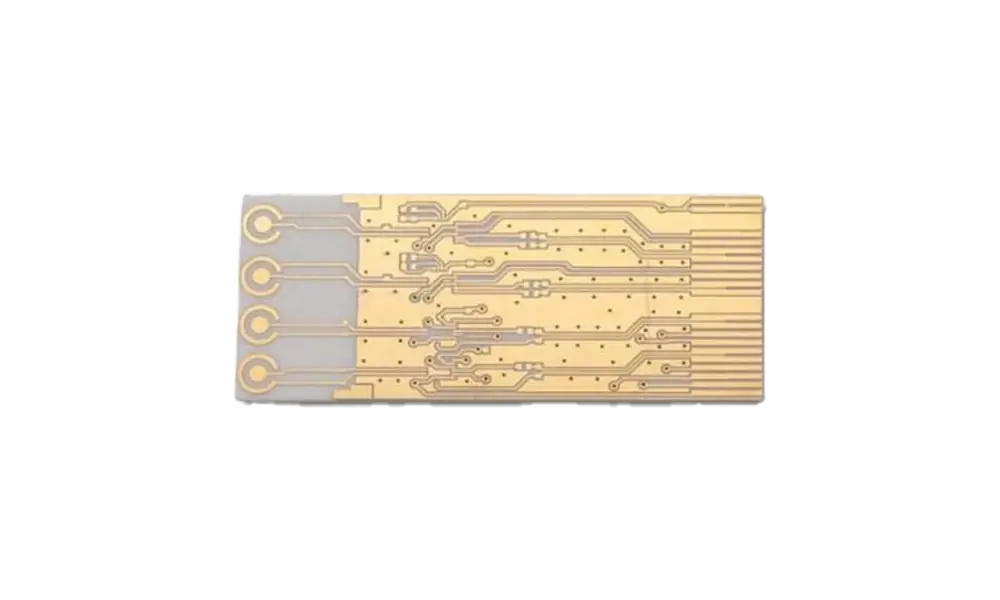
Alumina Ceramic PCB
Alumina ceramic PCB is one of the most widely used ceramic circuit boards. It provides a strong balance of thermal conductivity, electrical insulation, mechanical strength, and cost efficiency, making it suitable for LED, power, sensor, automotive, and industrial applications.
- Material:
- Best For:
- Cost Level:
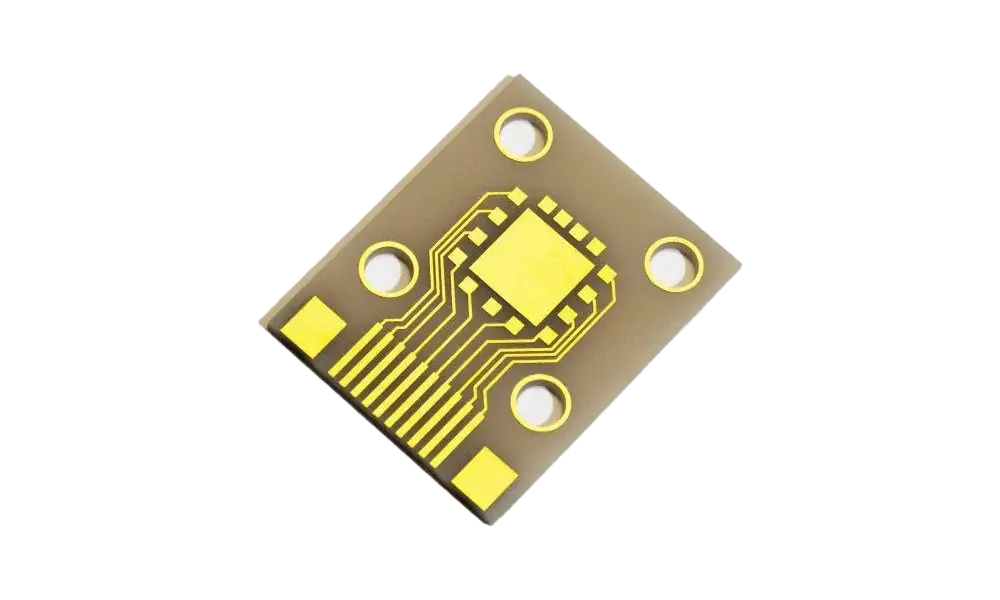
Aluminum Nitride Ceramic PCB
Aluminum Nitride ceramic PCB offers much higher thermal conductivity than alumina ceramic, making it suitable for high-power and heat-sensitive applications. It is often used where fast heat transfer and stable electrical insulation are required.
- Material:
- Best For:
- Cost Level:
Thick Film Ceramic PCB
Thick film ceramic PCBs are produced by printing conductive, resistive, or dielectric paste onto ceramic substrates and firing them at high temperature. This process is suitable for hybrid circuits, sensors, power modules, and custom electronic designs.
- Process:
- Best For:
- Cost Level:

DBC Ceramic PCB
DBC, or Direct Bonded Copper ceramic PCB, bonds copper directly onto a ceramic substrate. It provides excellent current carrying capability, heat dissipation, and reliability for high-power electronic modules.
- Structure:
- Best For:
- Cost Level:
What Is a Ceramic PCB?
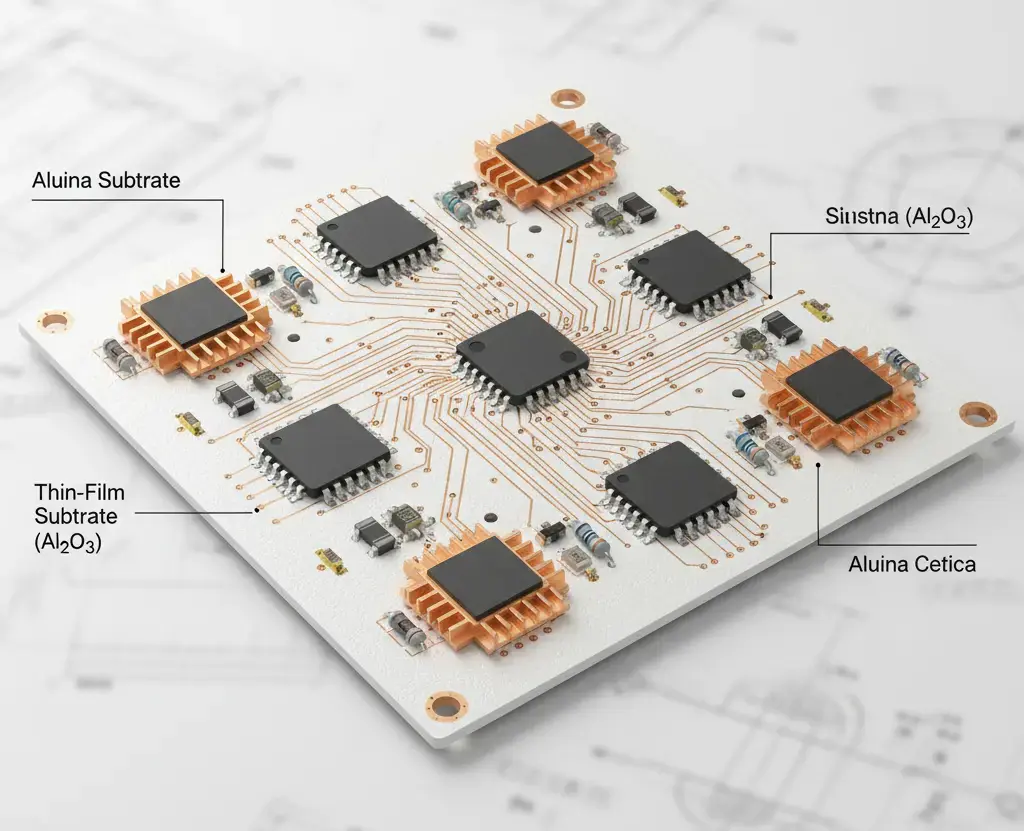
A ceramic PCB is a printed circuit board that uses ceramic material as the substrate instead of traditional FR4 or metal core material. Ceramic substrates provide excellent thermal conductivity, high insulation performance, low thermal expansion, and strong resistance to high temperature and harsh operating conditions.
Common ceramic PCB materials include:
- Alumina (Al2O3)
- Aluminum Nitride (AlN)
- Beryllium Oxide (BeO)
- Silicon Nitride (Si3N4)
- Other ceramic materials upon review
Ceramic PCBs are commonly used when conventional PCB materials cannot meet thermal, electrical, or reliability requirements.
Why Choose Ceramic PCB?
I am a heading
| Item | Ceramic PCB | FR4 PCB |
|---|---|---|
| Thermal Conductivity | High thermal conductivity, suitable for heat dissipation | Lower thermal conductivity, usually requires additional thermal design |
| Temperature Resistance | Excellent high-temperature resistance | Limited by resin and glass fiber material properties |
| Electrical Insulation | High insulation performance | Good for general electronics |
| Mechanical Stability | High dimensional stability and low thermal expansion | Good for standard PCB applications |
| Typical Applications | Power modules, RF, LED, aerospace, medical, high-temperature electronics | Consumer electronics, industrial control, communication, general circuits |
| Cost | Higher, suitable for high-performance applications | Lower, suitable for common PCB production |
Technical Capabilities
From prototype ceramic PCBs to custom ceramic circuit board production, LEADHUI supports a wide range of specifications based on customer files, materials, and application requirements.
| Capability Item | Specification |
|---|---|
| Ceramic PCB Type | Alumina Ceramic PCB, Aluminum Nitride Ceramic PCB, Thick Film Ceramic PCB, DBC Ceramic PCB, Custom Ceramic PCB |
| Substrate Material | Alumina (Al2O3), Aluminum Nitride (AlN), other ceramic materials available upon project review |
| Thermal Conductivity | Material-dependent; high thermal conductivity options available for power and thermal management applications |
| Board Thickness | Custom ceramic substrate thickness available upon project review |
| Copper Thickness | Standard and thick copper options available depending on ceramic material and process |
| Surface Finish | ENIG, silver, gold, nickel, or other finishes available upon project requirements |
| Circuit Process | Thick Film, DBC, DPC, or other ceramic circuit processes available upon review |
| Applications | Power Electronics, LED Modules, RF Devices, Automotive Electronics, Medical Electronics, Sensors, High-Temperature Electronics |
| Testing | Electrical Test, Visual Inspection, Dimension Inspection, Final Quality Inspection |
Aluminum PCB FAQ
What is a ceramic PCB used for?
Ceramic PCBs are used in applications requiring high thermal conductivity, high electrical insulation, high temperature resistance, and long-term reliability, such as power modules, LED, RF, automotive, medical, and aerospace electronics.
What materials are commonly used for ceramic PCBs?
Common ceramic PCB materials include alumina, aluminum nitride, silicon nitride, and other ceramic substrates. Material selection depends on thermal, electrical, mechanical, and cost requirements.
Is ceramic PCB better than aluminum PCB?
Ceramic PCB usually offers higher thermal conductivity, insulation, and temperature resistance, while aluminum PCB is often more cost-effective for LED lighting and general thermal management applications.
Can ceramic PCB support high-power applications?
Yes. Ceramic PCBs are widely used in high-power modules, LED modules, MOSFET modules, IGBT modules, and other power electronics.
Can LEADHUI PCB provide ceramic PCB assembly?
Ceramic PCB assembly can be reviewed according to board structure, components, soldering requirements, and testing needs.